
Last updated November 21, 2026
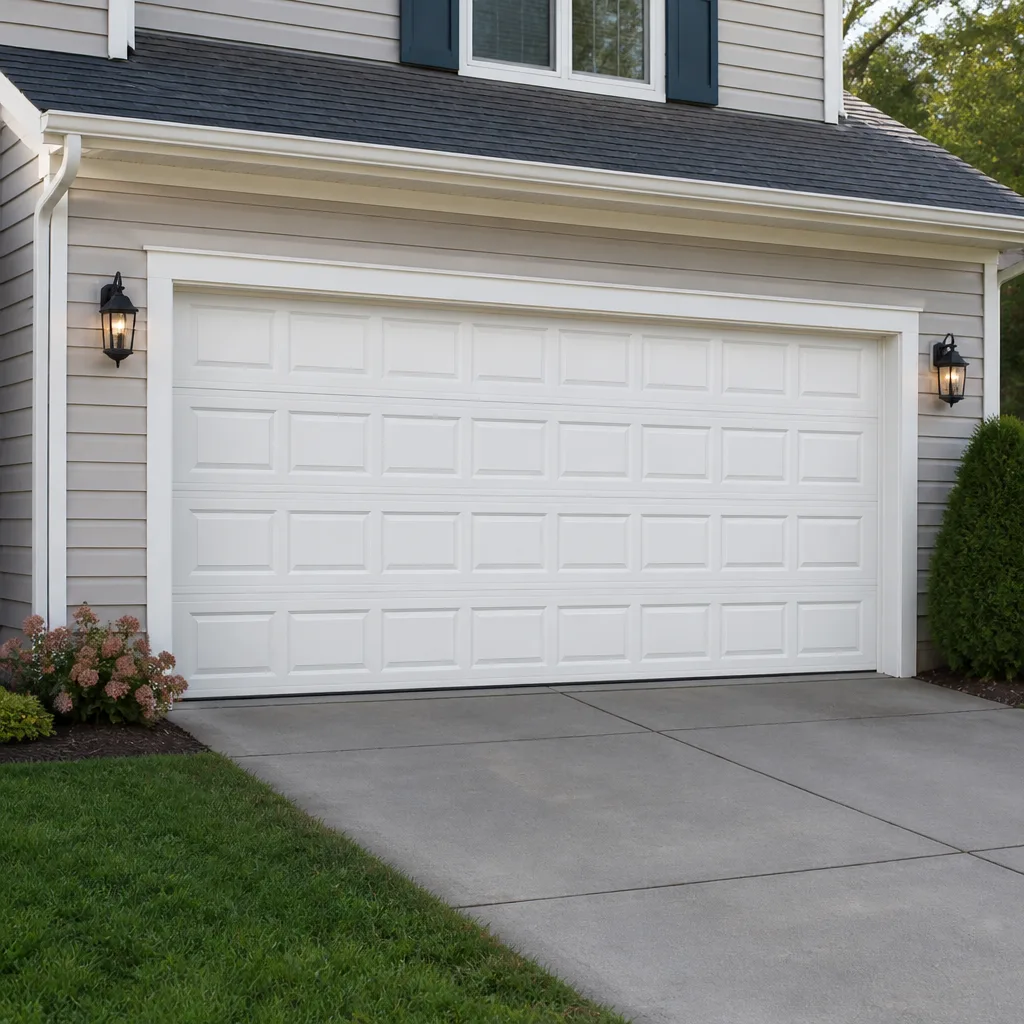 Raised-panel steel
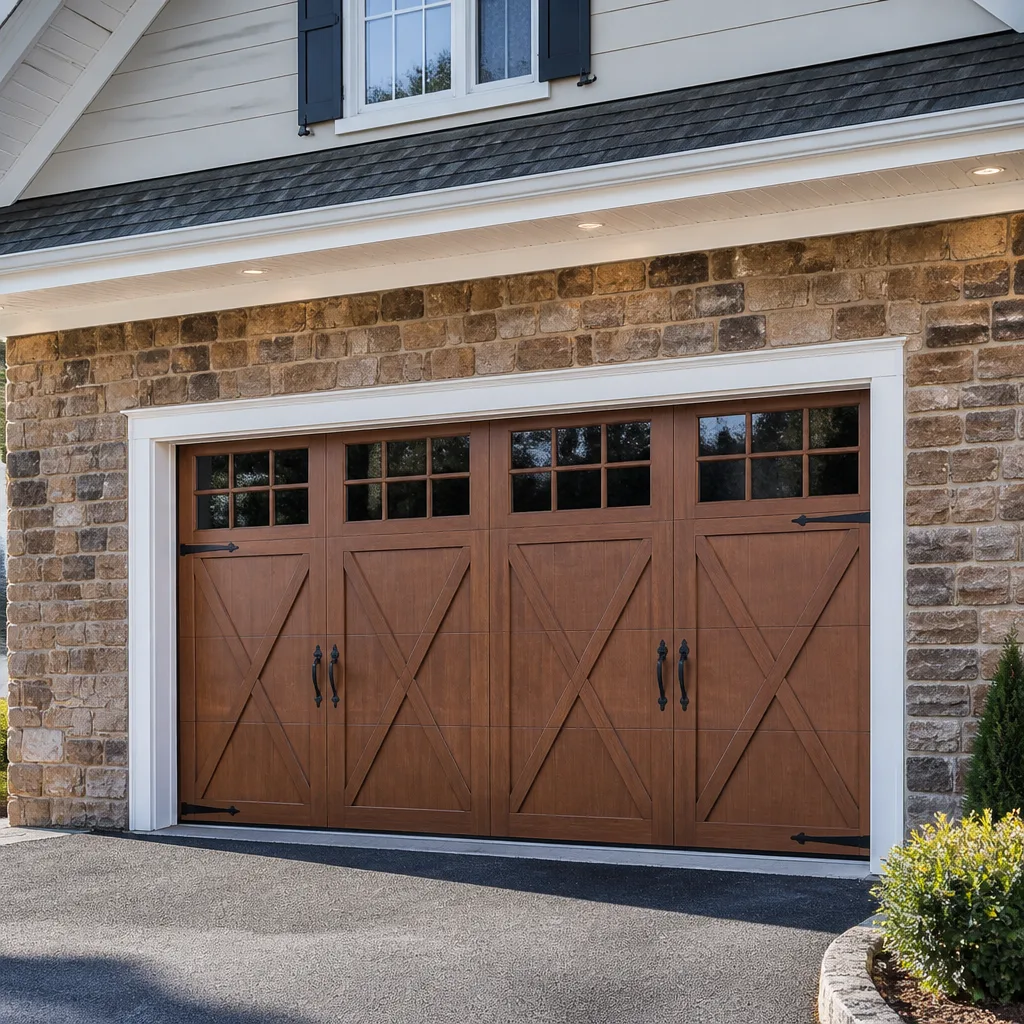 Carriage house
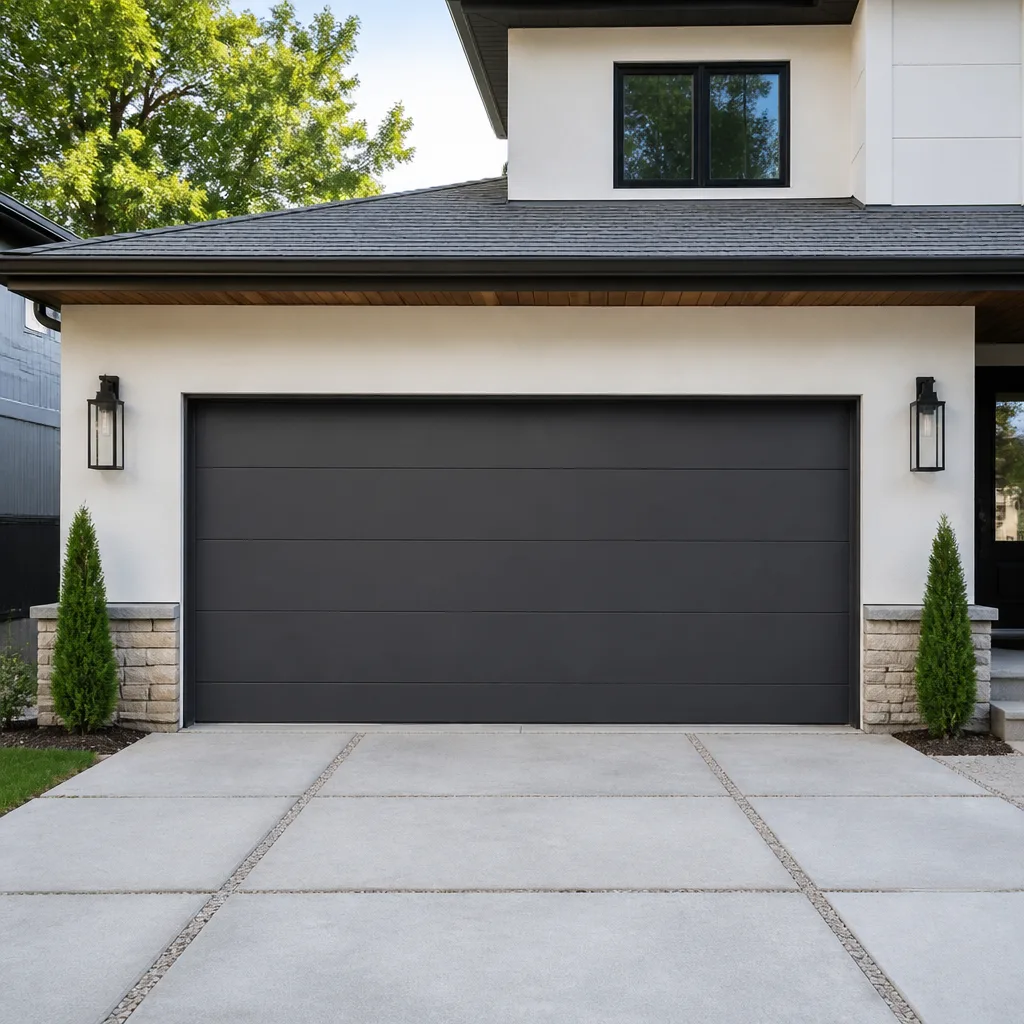 Modern flush
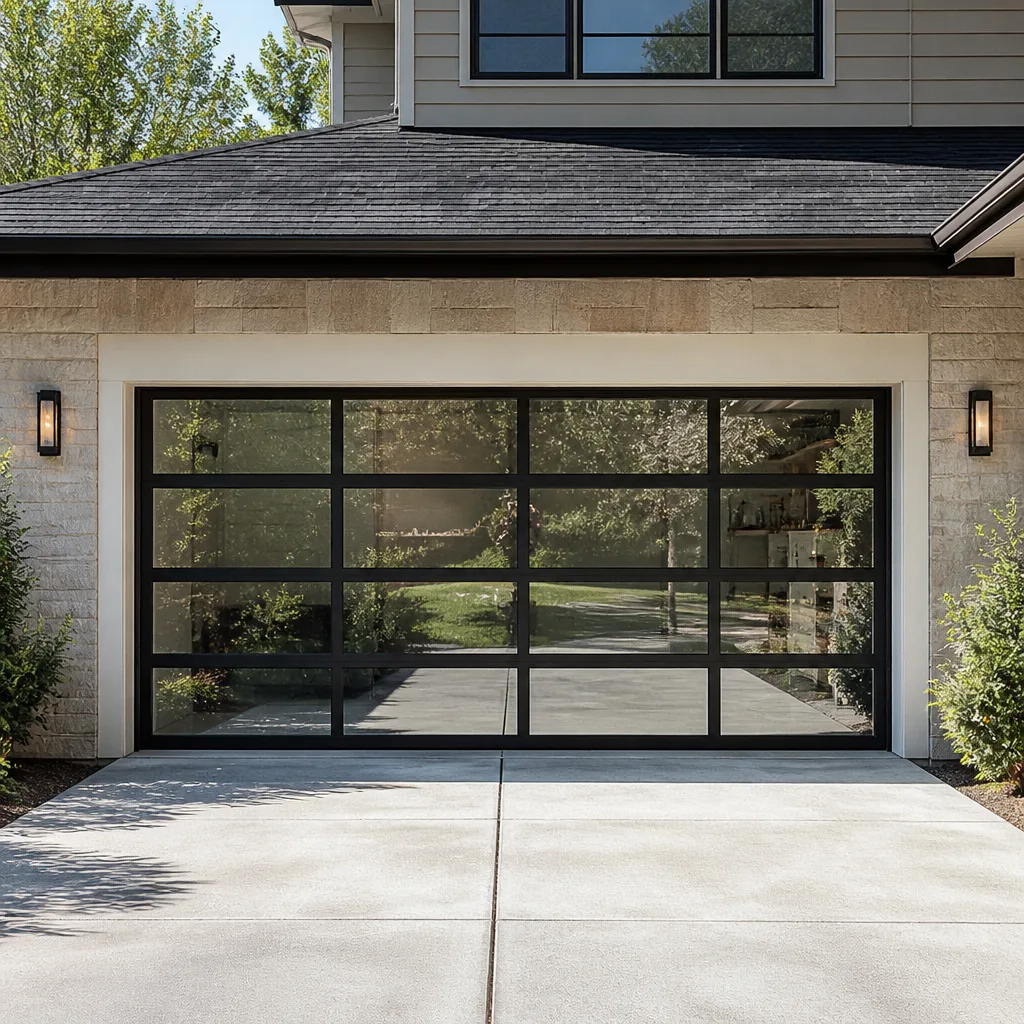 Full-view glass
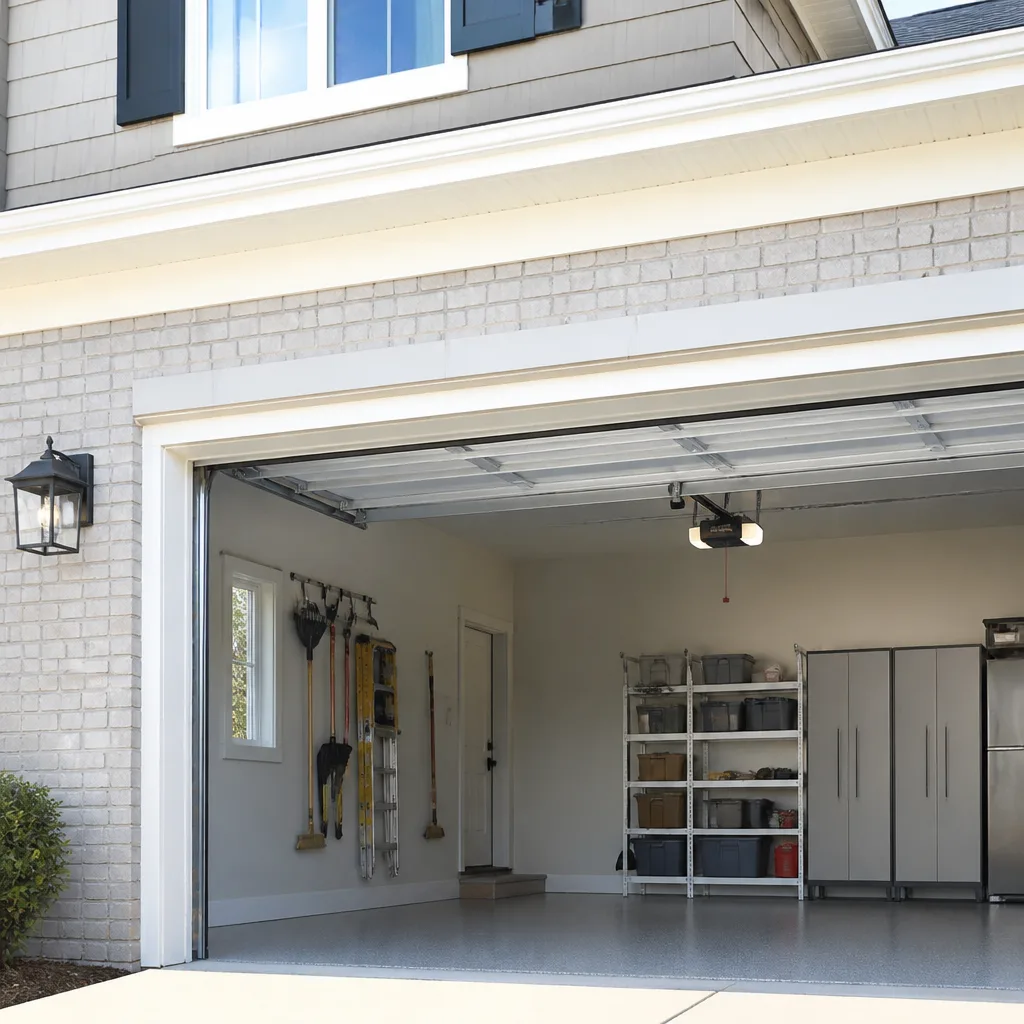 LiftMaster openers
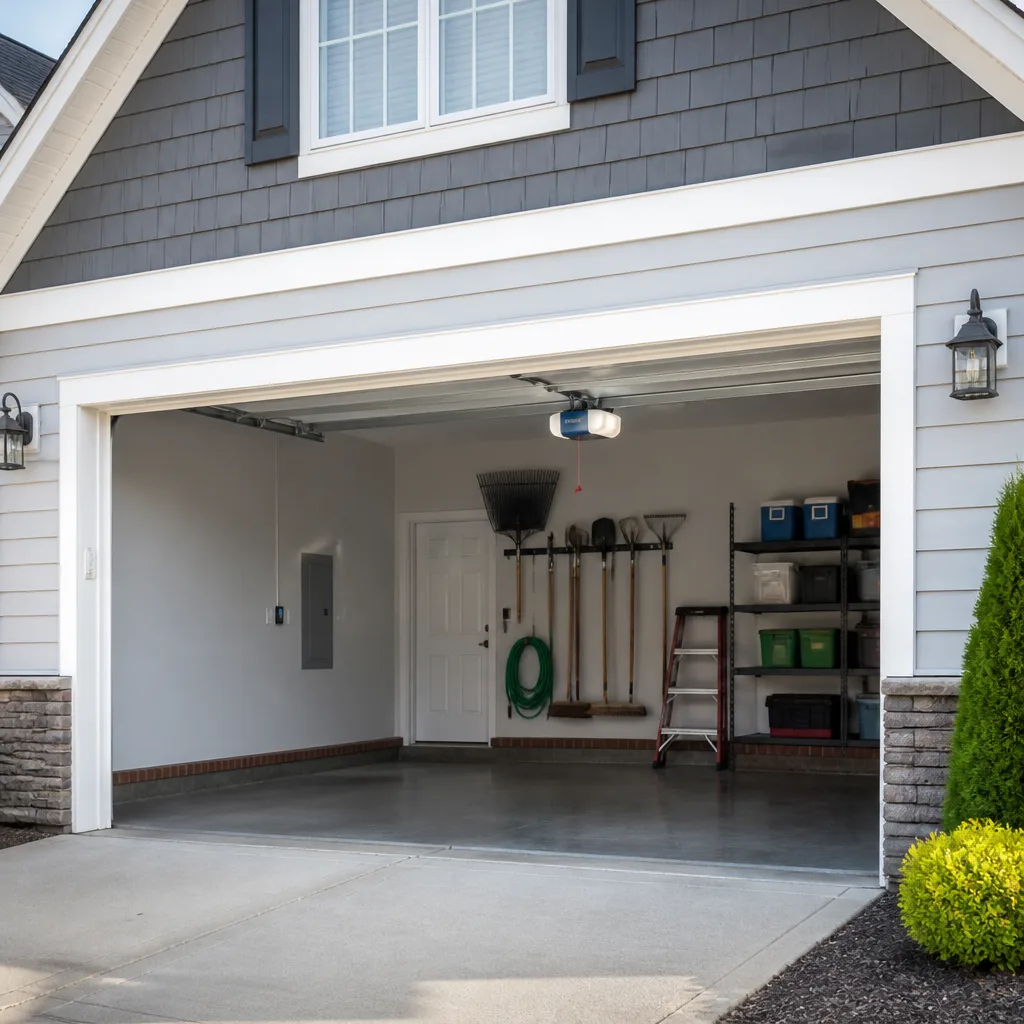 Chamberlain openers
Full 25-point door and opener safety check with every visit - springs, cables, rollers, tracks, and your LiftMaster or Chamberlain opener included
You get a price before we start. It does not change when the pro arrives.
Get your free estimateGarage Door Cost Breakdown: The Plymouth Homeowner’s Reference for 2026
Two Plymouth homeowners can each be quoted for what sounds like the same spring replacement and see prices of $189 and $780. Both quotes can be legitimate. The gap usually isn’t greed or a scam – it’s a difference in what’s being replaced, the door it’s going into, when the work happens, and how the shop prices its labor. The word “spring replacement” covers a startling amount of ground, and the sticker with the lowest number isn’t always the one that costs less over the life of the door. This guide breaks down the full cost structure behind garage door pricing in Plymouth, MN: what each of the ten most common repairs runs in 2026, which hidden factors push a job up or down, how installation prices vary by material and insulation, and how to judge repair against replacement using the age of your door’s components.
Quick Answer
Garage door repair in Plymouth, MN in 2026 typically runs $150 to $450 for common fixes like springs, cables, rollers and openers, while a full new door installation generally lands between $1,200 and $4,500 depending on material, insulation and size. The single biggest driver of where your job falls inside those ranges is whether it’s a standard component on a standard door, or a non-standard setup that takes more labor, parts or scheduling. A written estimate that itemizes the part, the labor and any door-specific adjustments is the only number that should count.
Styles & brands we work with
- Raised-panel steel
- Carriage house
- Modern flush
- Full-view glass
- LiftMaster openers
- Chamberlain openers
Table of Contents
- What do the ten most common garage door repairs cost in Plymouth?
- What hidden factors push a garage door quote up or down?
- What does a new garage door installation cost by material and insulation?
- Repair or replace? A component-age framework
- What do labor rates actually look like in the Plymouth and Hennepin County market?
- Why flat-rate pricing can go either way
- How Plymouth’s climate and housing stock affect your bill
- Common mistakes to avoid
What do the ten most common garage door repairs cost in Plymouth?
Most garage door repairs in Plymouth fall into a predictable set, and each has a different cost profile because the part, the labor and the safety requirements vary so much between them. Here’s how the ten most common jobs break down for 2026. These are typical ranges for standard residential doors; a written estimate sets the final price for your specific door.
| Repair | Typical low | Typical mid | Typical high | What drives the high end |
|---|---|---|---|---|
| Single torsion spring replacement | $189 | $260 | $340 | Non-standard drum size, heavy door, spring requiring special-order stock |
| Matched pair of springs | $380 | $520 | $680 | Same as above, times two, plus re-balancing labor |
| Extension spring replacement (pair) | $180 | $260 | $360 | Older door with worn brackets that need replacement too |
| Cable replacement | $150 | $220 | $320 | Corroded drums, damaged bottom brackets, safety inspection added |
| Roller replacement (set of 10) | $130 | $200 | $280 | Upgrading to nylon rollers, seized hinge pins needing replacement |
| Panel replacement (single section) | $250 | $450 | $750 | Discontinued profile, custom color match, insulated panel |
| Opener replacement (belt or chain) | $350 | $550 | $850 | Smart opener with Wi-Fi, new rail for non-standard door height, old wiring |
| Opener circuit board or logic board | $200 | $320 | $450 | Older out-of-production board, brand-specific sourcing |
| Sensor and safety eye replacement | $120 | $180 | $260 | Wiring runs damaged behind drywall, new mounting needed |
| Track straightening or replacement | $180 | $300 | $520 | Bent vertical track, wall damage behind the track, re-hanging the door |
The spread on a spring replacement alone – from under $200 to nearly $350 for a single spring – is why the same job can produce the two quotes in the opening. The part itself is a relatively small piece of a spring job; most of the cost is labor, safety handling and the balancing work that follows. A matched pair is almost always replaced together because the two springs are wound to share the load. Replacing one of a matched pair usually means the second fails soon after, so we quote pairs as two springs, not one.
Springs, cables and the parts under tension are the most dangerous components on any garage door. A torsion spring under load can release violently if it’s handled without the right tools and winding technique, and there’s no safe way to test one by hand. If a spring has snapped, don’t try to lift the door or cycle the opener to see what happens. That’s the moment to stop and call a trained technician. Our garage door spring repair work is built around that safety step first.
Estimates on every one of these ten repairs are free in Plymouth, and the price you’re given is the price you agree before any work starts.
What hidden factors push a garage door quote up or down?
The part and the labor are only the visible half of a garage door quote. The other half is a set of conditions that don’t show up on the invoice line but very much shape the number at the bottom. Understanding them is how you read two quotes accurately instead of guessing which one to trust.
- Door height and width. A standard 7-foot door is the base case. An 8-foot door needs taller springs, longer cables, more track and more winding turns, and a wider-than-standard door puts more load on every component. Plymouth’s older neighborhoods have a mix of door sizes that don’t all match today’s stock, and that’s one of the most common reasons a quote comes in higher than expected.
- Door weight and construction. A solid wood door, a heavily insulated steel door, or a door with glass can weigh substantially more than a basic steel panel door. Spring matching is weight-dependent, so a heavier door needs heavier springs and more careful balancing.
- Brand and part availability. Parts for common systems cost less because they’re stocked widely. Out-of-production boards and discontinued panel profiles cost more because sourcing takes time. This is where multi-brand capability matters: we work across Clopay, Amarr, Wayne Dalton, LiftMaster and the other major lines, so the search for a part starts in the right place.
- Condition of adjacent components. A cable replacement on a door with corroded drums often becomes a drum replacement too. A panel swap in an older door can reveal a bent stile. A good estimate flags these before work begins rather than delivering a surprise invoice.
- Access and clearance. A door on a tight side yard, a low-clearance ceiling, or a garage with an obstruction above the tracks adds time to the job.
- Scheduling. A blocked door that has to be handled quickly pulls labor from other jobs. Non-urgent repairs can often be scheduled to keep the cost steady. What isn’t true in Plymouth – or anywhere – is that a legitimate shop charges a premium just because you called at a certain hour. The price is quoted per job up front.
None of these factors are secrets; any honest estimate should tell you which ones apply to your door. What’s harder to see is the opposite: quotes that come in surprisingly low because they leave out a component that will fail next. A cheap quote on a single spring typically means the other spring isn’t addressed. A cheap quote on an opener sometimes means reusing a failing rail. The best number is the one that covers what actually needs doing.
What does a new garage door installation cost by material and insulation?
New garage door installation in Plymouth in 2026 typically runs $1,200 to $4,500 for a standard single door, and $2,000 to $7,000 for a double door, with material and insulation grade accounting for most of the spread. Unlike a repair, this is a measured, ordered and scheduled job rather than a same-day fix. The right sequence starts with a free measure so the manufacturer’s sizing and your garage’s dimensions line up, then a written price before anything is ordered.
Here’s how the four main door materials compare:
- Steel. The most common choice for a reason. A basic non-insulated steel door is the entry point at the low end of the range. A steel door with insulation moves into the middle. Steel takes paint well, holds up through a Minnesota winter, and repairs are straightforward if a single panel is damaged later.
- Wood composite / carriage-style steel. The look of wood without the maintenance. This tier sits above standard steel and typically runs from the middle of the range to near the top. Carriage-house panel styles with decorative hardware are part of what you’re paying for here.
- Aluminum. Lighter than steel and often used on glass-panel doors and modern designs. Prices vary a lot by frame and glazing type, generally landing in the middle tier.
- Wood. The top of the range, and the highest-maintenance choice in a climate as freeze-thaw-heavy as Plymouth’s. Wood doors need regular sealing to hold up through winters here, which is a real cost beyond the purchase price.
Insulation grade deserves its own paragraph because it’s the most under-considered part of a door purchase. An uninsulated steel door is a thin layer of steel between your garage and the outside. It does what a garage door is supposed to do – open and close, keep the weather out to a point – but it doesn’t hold much warmth and it’s loud. A foam-core or polyurethane insulated door costs more up front and changes how the garage feels year-round, particularly in a Plymouth winter where the door is facing the wind. Insulation grade is usually quoted in tiers rather than as a single number, and the jump from basic to full insulation is one of the clearest value upgrades on the market.
Installation cost also includes the opener and any hardware upgrade at the time of installation. If you’re stretching from an old chain-drive opener to a Wi-Fi-enabled LiftMaster or Chamberlain myQ unit, that adds to the project but typically shares the labor with the door swap. A written measure and quote spells out which components are new and which carry over.
Repair or replace? A component-age framework
The decision to repair or replace usually turns on how much of the door’s working system is already worn out. A door is not a single unit – it’s a set of components that wear on different schedules. When most of them are still healthy, repair is the obvious answer. When most are near the end, repairs start to look like a down payment on a replacement. This framework is how we evaluate it:
- Assess the springs and cables first. Springs typically last somewhere in the range of 10,000 to 20,000 cycles depending on the spring and how well the door is balanced. A high-cycle spring lasts noticeably longer but costs more to replace. If the springs were replaced recently and are still in good condition, they carry over to any repair. If they’re at the end of their life, a replacement door usually comes with fresh springs – which changes the math.
- Assess the panels and structure. A door with one damaged panel on an otherwise straight, sound door is a clear repair. A door with multiple bent panels, bowed verticals or rust running through the seams is showing structural wear, and replacement gets more attractive.
- Assess the opener’s age and support status. Openers built in the last decade, especially LiftMaster, Chamberlain myQ and modern Genie units, are worth keeping when they’re healthy. Legacy units and out-of-support systems are less repair-worthy because parts get scarce and the cost of a board or motor starts to rival a new opener.
- Add up the cost of the next 24 months of likely repairs. Springs, an opener board, a set of rollers and a cable replacement on a single door can approach the cost of a modest new door. Not always, but often enough that it’s worth pricing both before committing.
- Consider what you’re gaining from replacement. A new door brings insulation, quieter operation, modern smart-opener compatibility, a fresh finish, and a warranty on the assembly. A repaired old door brings working operation and nothing else. Both are legitimate outcomes; the decision depends on which column matters more to you.
If you’re close to the fence, the cheapest next step is usually a diagnostic visit. A technician measures the door, inspects the components and gives you a written comparison of the repair and the replacement side by side, so you can decide with numbers instead of a guess.
What do labor rates actually look like in the Plymouth and Hennepin County market?
Labor is typically 50% to 65% of a garage door repair bill in the Plymouth and Hennepin County market, which makes it the single biggest variable in a quote. A flat hourly rate doesn’t tell you much on its own because garage door work is priced by the job, but the underlying cost of getting a trained technician to your door and having them do the work in a reasonable amount of time is what drives every quote.
What shapes labor in this market:
- Travel and scheduling. A technician has to physically reach your door. In a metro area like Plymouth, travel time across town – especially through busy corridors during rush hours – is a real cost baked into every job. It’s also why a shop that can dispatch a tech already nearby costs less than one calling a tech from the far side of the metro.
- Skill level. Spring, cable and torsion work takes more training and safety handling than a roller swap or a sensor replacement. The labor line items reflect that. Our technicians have up to 11 years of experience across opener brands and door systems, and that experience is directly reflected in how fast a job gets done correctly the first time.
- Job complexity. A standard spring swap on a standard 7-foot door is among the most predictable jobs in the trade. Two springs on an 8-foot wood door with a custom drum is not. The labor follows the complexity.
- Parts cost baked into the rate. Many shops quote a flat rate that folds the part cost into the labor figure, so the “labor” number you see is actually labor plus markup. That’s not dishonest, but it’s worth knowing when you compare quotes.
- Emergency dispatch. Fast dispatch from 7am to 7pm keeps a predictable window for getting to your door. For a blocked or stuck door, that speed matters more than a few dollars on the quote. The number you’re given should be the number you pay either way.
If you’re comparing quotes from multiple shops, ask each one to break the labor and the part separately, and to tell you what brand and model of part they’d use. Two quotes with the same headline number can hide very different parts inside them. When the parts match, the labor is what you’re really comparing.
Why flat-rate pricing can go either way
Flat-rate pricing on garage door repair can be excellent or terrible, and the difference isn’t the pricing model itself – it’s whether the flat rate matches the actual job in front of you. Done well, flat-rate means you know the price before work starts, no surprises, no running-meter anxiety. Done poorly, it means you’re paying the same amount for a job that took twenty minutes as you would for one that took two hours, and in the wrong direction that leaves money on the table or costs you more than an hourly job would have.
Flat-rate works in your favor when:
- The job is standard. A single torsion spring replacement on a standard 7-foot steel door is one of the most commonly repeated jobs in the trade, and a shop that does it dozens of times knows the range inside and out.
- You want the number fixed before work starts. That’s the whole promise of flat-rate, and it’s a good one when it’s honest.
- The job runs long. If a repair takes longer than expected because of a stuck bolt or a hard-to-reach drum, a flat rate protects you from watching the clock.
Flat-rate works against you when:
- The flat rate is really a starting point, and the technician adds charges once on site. This is a common reason a quote turns into an invoice bigger than the number you agreed to. The defence is to insist on a written price before work starts and hold the shop to it.
- The job is genuinely unusual. If your door isn’t standard, a flat-rate quote may not be tailored to it, and you’re either overpaying or the shop discovers the mismatch mid-job.
- The flat rate includes parts nobody asked for. If a quote bundles rollers, hinges and cables into a “spring replacement” line, you’re paying for things that may not need replacing.
In our experience, the honest version of flat-rate pricing is simple: an itemized written estimate that names the parts, names the model, names the labor, and states clearly that the price won’t change once work starts unless the customer approves a change. If a shop can’t give you that, the pricing model isn’t the problem.
How Plymouth’s climate and housing stock affect your bill
Plymouth’s climate and housing stock shape garage door pricing in ways that don’t show up in a generic national cost guide. Two factors stand out.
The first is winter. Plymouth winters cycle the garage door through a wide temperature range, and the freeze-thaw cycle is one of the main reasons a door that worked in October needs adjustment by January. Cold contracts the metal, shrinks the seals and can make a spring feel different than it did in the summer. A door that’s slightly out of balance in the summer will show it in a Plymouth winter. This is also the season when rollers, hinges and track brackets take the most wear, and when a stuck door becomes a real urgency because the car is stranded inside.
The second is the housing stock. Plymouth has a mix of older homes with original doors and newer construction with the standard builder-installed steel doors. The older homes tend to have the non-standard sizes, the older springs with more cycles on them, and the hardware that’s due for replacement. The newer homes tend to have the insulated steel doors and either a modern LiftMaster or a builder-grade opener that’s approaching the end of its usable life. Two Plymouth houses on the same street can need very different work at the same moment.
That’s also why door-brand matching matters here. A door installed by a builder might be a Clopay or an Amarr, and knowing the brand narrows down the panel profile, the right replacement springs and the compatible hardware. We work on all the major brands – Clopay, Amarr, Wayne Dalton, LiftMaster, Chamberlain, Genie, Craftsman and Raynor – which means no part search starts at zero.
Ten most common Plymouth repairs, one more time in plain list form
If you’re looking at the table above and want the same information in an ordered sequence, here are the ten most common garage door repairs in Plymouth, ranked roughly by how often we’re asked about them:
- Single torsion spring replacement
- Matched pair of torsion springs
- Opener replacement or opener board repair
- Roller replacement
- Cable replacement
- Panel replacement
- Extension spring replacement
- Safety sensor replacement
- Track straightening or replacement
- Hinge replacement
Most of these are repairs to the door’s mechanical system. The ones that involve tension – springs, cables, drums – are the ones to leave alone. If you’re unsure which category your problem falls into, a diagnostic visit answers the question and pins down the price.
See the difference
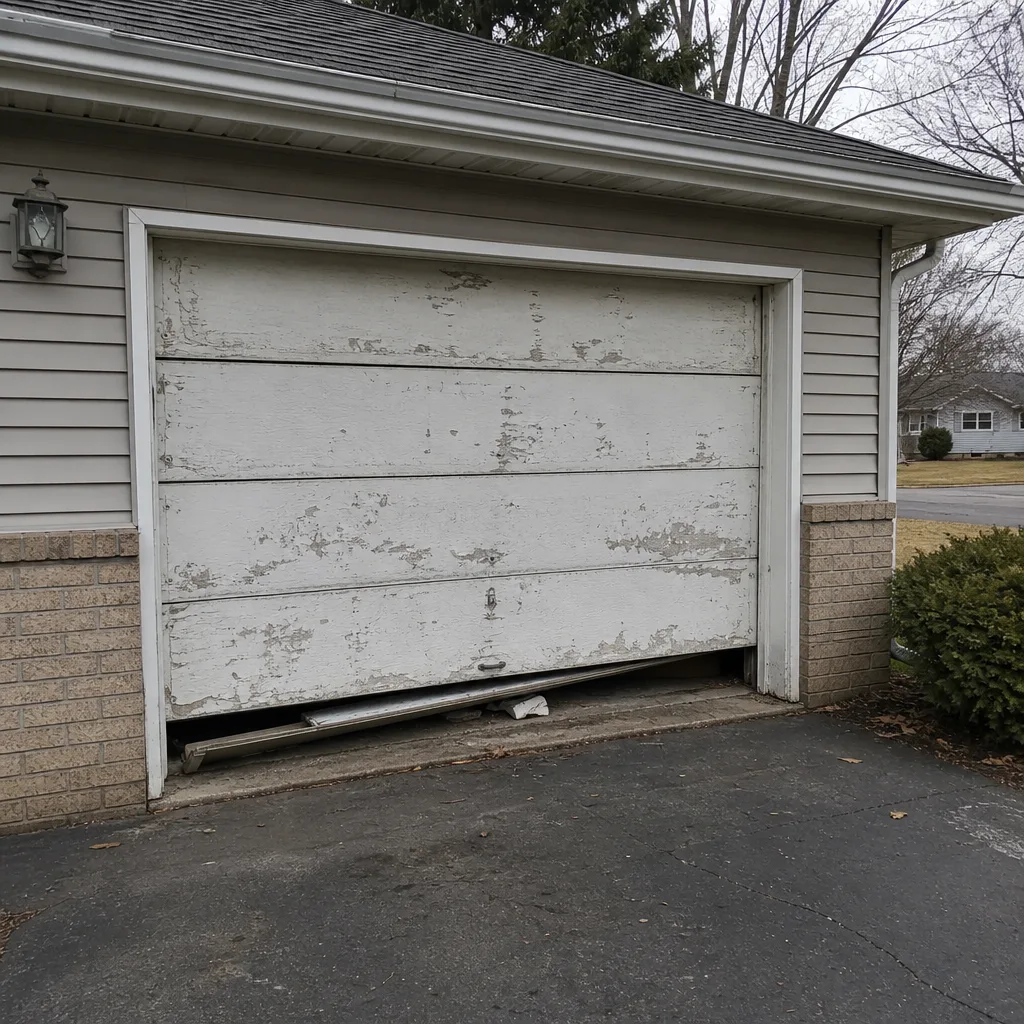 Before
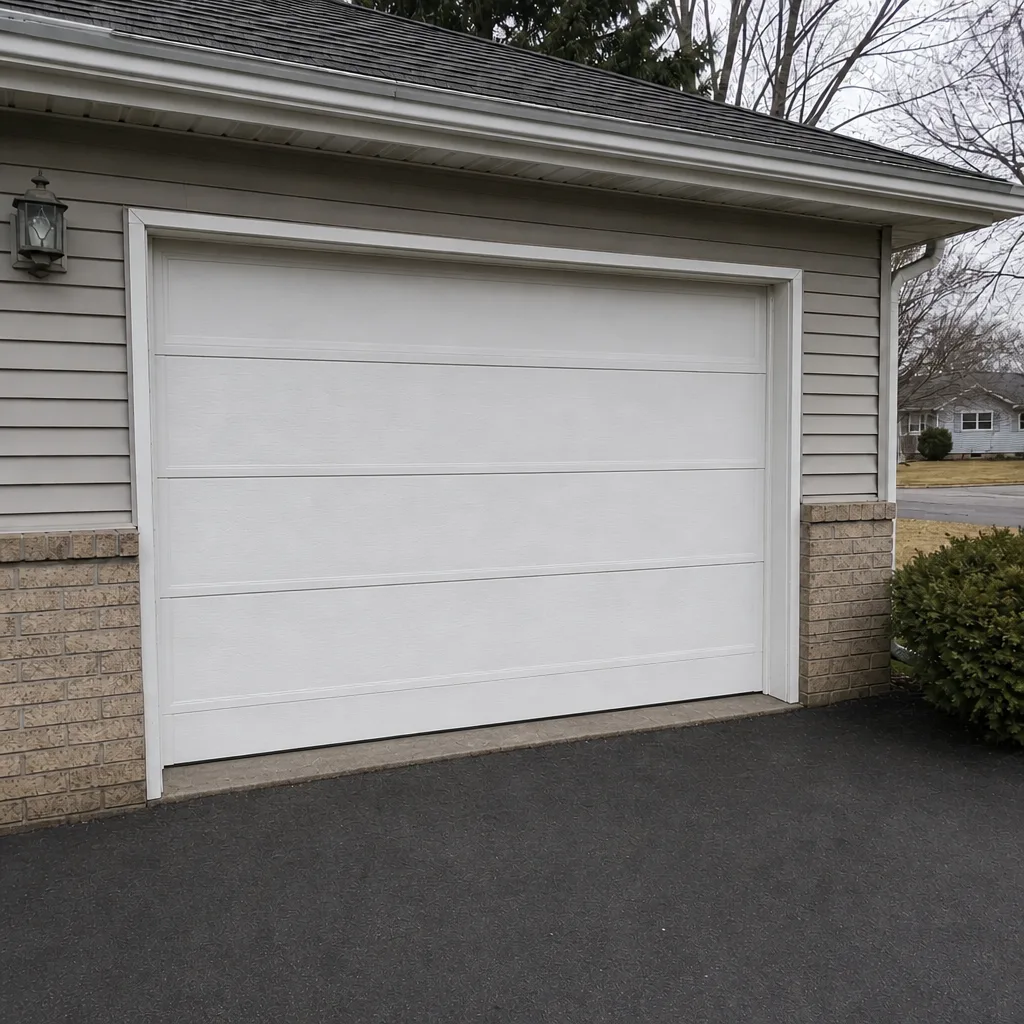 After
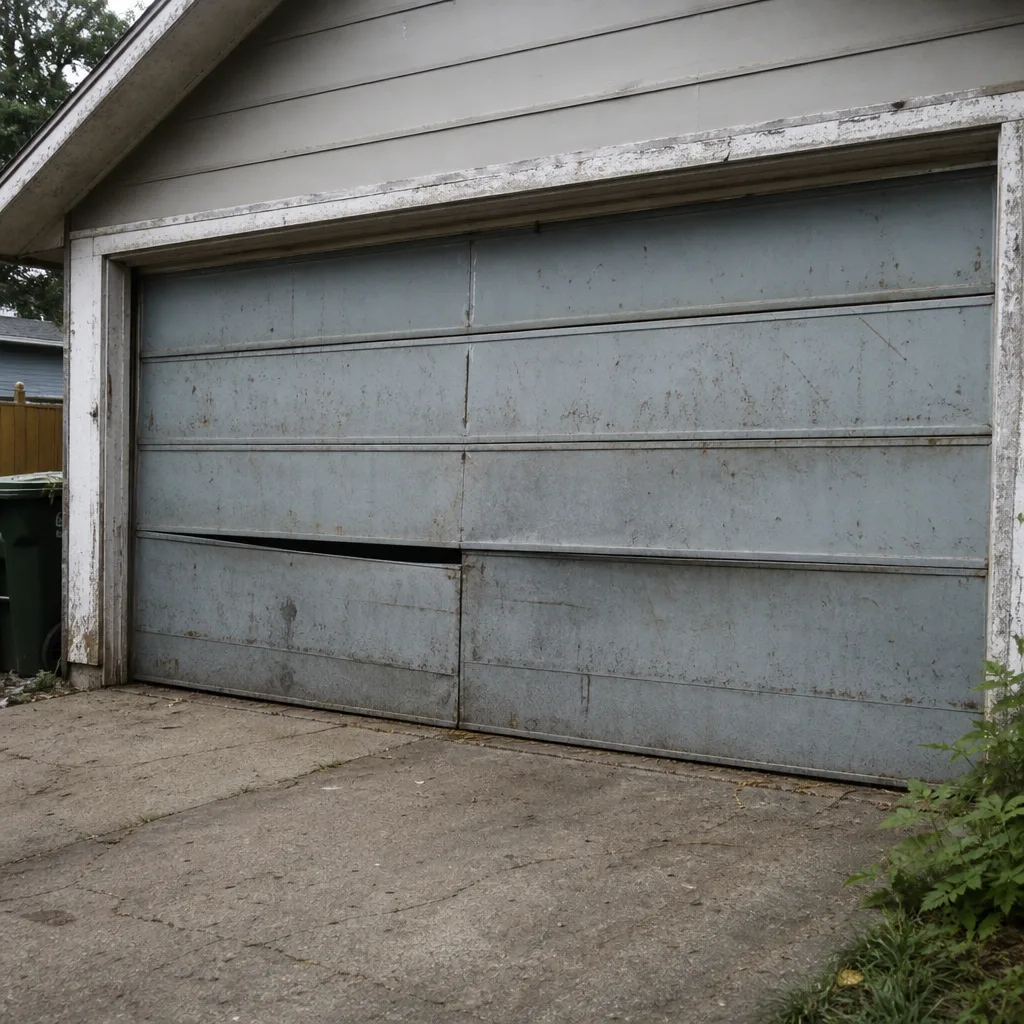 Before
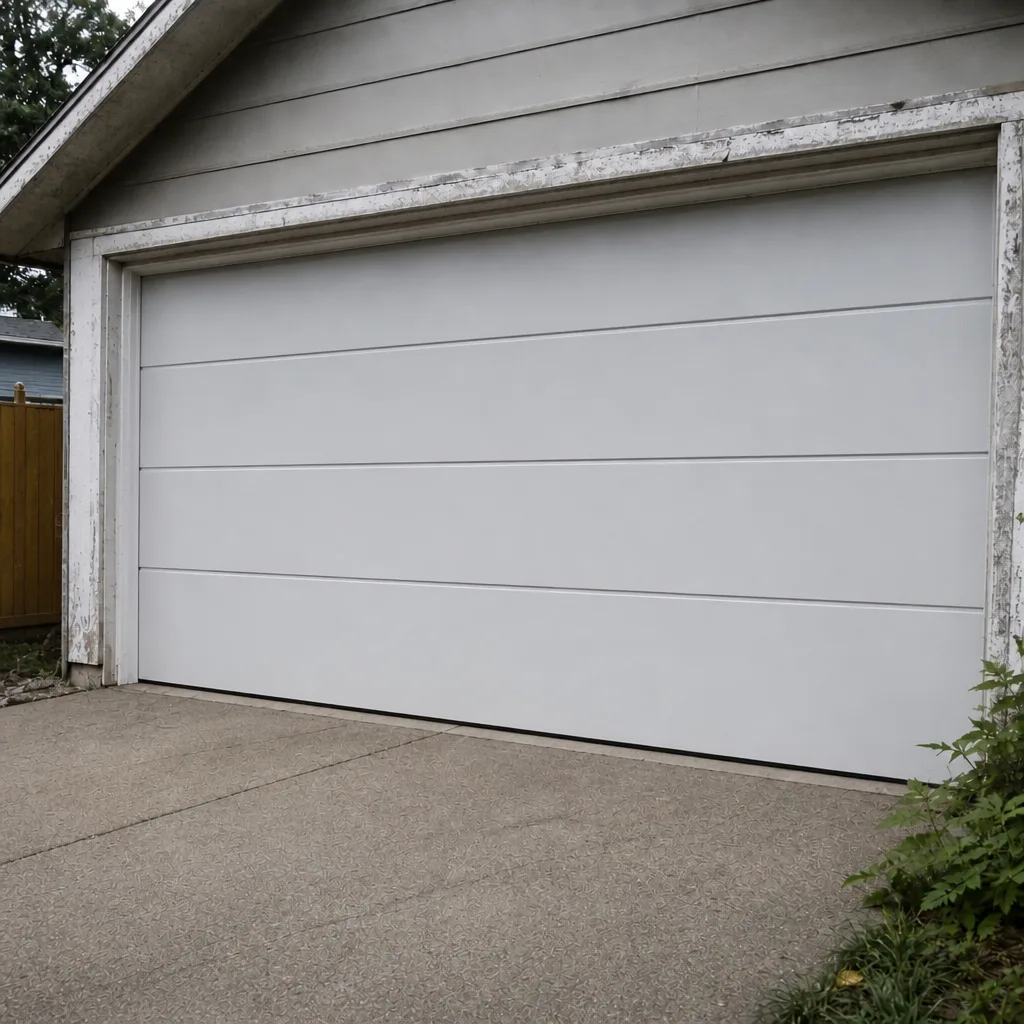 After
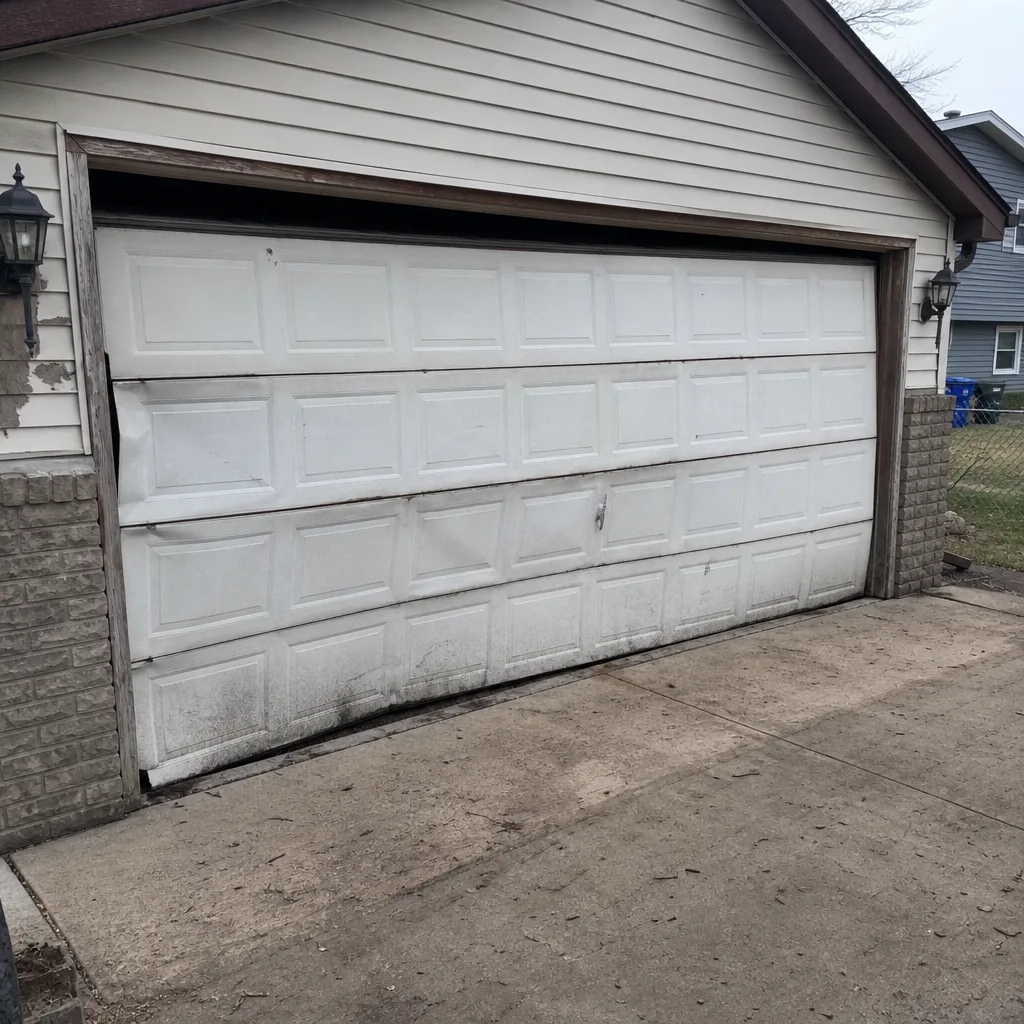 Before
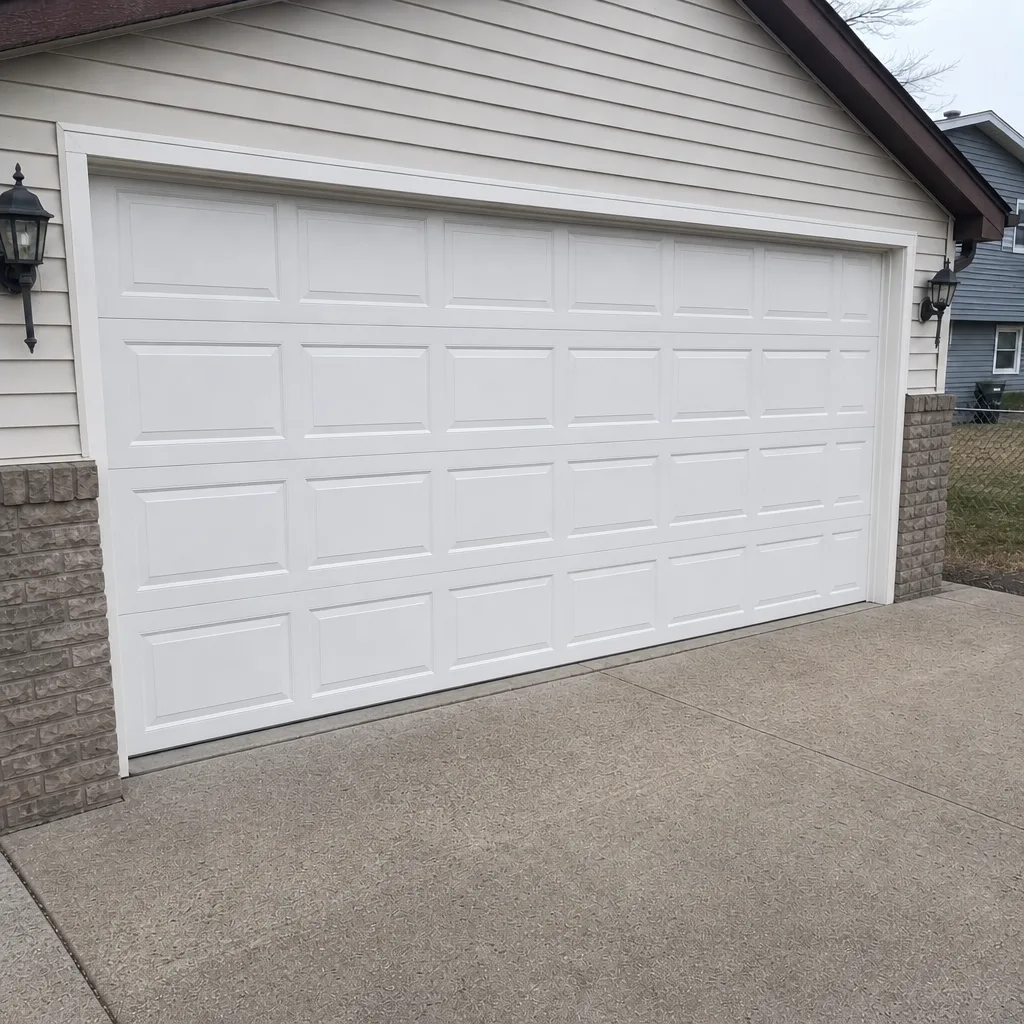 After
How to read a garage door estimate line by line
A written estimate should tell you exactly what’s being done, part by part, so you can compare it to another quote and to the numbers in this guide. Here’s the structure a clear estimate follows:
- Problem statement. What’s wrong, in plain language. “Right torsion spring broken” is clear. “Door not functioning correctly” isn’t.
- Parts, with brand and model. The spring manufacturer, the opener model, the roller type. Brand and model matter because a generic spring and a high-cycle spring are not the same part.
- Labor, itemized. What work is being done and how much of it is labor. Torsion spring replacement, re-balancing, safety inspection and hauling off old parts are all different labor items.
- Written price and payment terms. The number you’ll pay, not a range. What’s covered and what isn’t.
- The price-change clause. The clear statement that the price won’t change once work starts unless you approve a change. That’s the sentence to look for.
If an estimate skips any of those, ask. A shop that can’t put it in writing isn’t telling you the price – it’s telling you a starting point. The garage door repair work we do starts with a written estimate before any tool comes out of the case.
Common mistakes to avoid
A few specific errors show up over and over when Plymouth homeowners compare quotes or try to solve a garage door problem themselves. Each one tends to cost more than it saves.
- Comparing only the headline number. A $189 quote and a $340 quote for the “same” spring replacement aren’t the same job until you check the part, the door and what’s included. Read the line items, not just the bottom number.
- Replacing a single spring on a matched pair. Springs share the load; when one fails, the second is close behind. Replacing one is the false economy that leads to two visits instead of one. A matched pair is the honest fix.
- Letting a technician work without a written estimate. The most common way a bill exceeds a quote is a verbal agreement with no written number attached. A legitimate shop gives you the number before work starts.
- Trying to lift or cycle a door with a broken spring. A door with a snapped tension spring can be far heavier than expected, and the opener motor or the lifting gear can fail under the load. If the spring has failed, don’t test it – call a trained technician.
- Ignoring a slow-looking opener or an aging board. A stretching opener or a board with a partial failure can damage the door over time. Small repairs caught early stay small.
- Buying a door without measuring twice. A new door ordered on an assumption about size is the most expensive kind of mistake. The free measure exists to prevent it.
- Assuming a cheap quote equals a cheap outcome. It can. It can also mean a part that wears out in a season or a component that’s not addressed. The cheapest quote is only cheap if the door works after.
When to call a professional
Some garage door problems are genuinely a job for a trained technician, and it’s worth knowing which ones. If a torsion spring has snapped or the door is hard to lift by hand, stop and call. If a cable has frayed or come off its drum, the door is no safer than one with a broken spring – don’t cycle the opener. If the door is hanging off its track, moving roughly, or the opener is running but the door isn’t moving properly, the diagnosis needs to be in person. If the safety sensor won’t reset after a bulb change and a quick alignment attempt, the sensor or its wiring is the likely culprit. In each of these, the door itself may be under tension or load even when it looks static, and that’s the exact condition a trained technician is equipped to work on. Plymouth Garage Door Repair Pros offers free estimates in Plymouth – call (855) 337-1124. We answer 24/7. Fast dispatch from 7am to 7pm, Sunday through Friday.
Frequently Asked Questions
Most common garage door repairs in Plymouth run $150 to $450 in 2026, with springs typically $189 to $340 per spring, opener replacement $350 to $850, and panel replacement $250 to $750 for a single section. The number depends on your door’s size, weight and brand, and the exact written estimate sets the final price. Call (855) 337-1124 for an exact quote – estimates are free.
Two quotes for the “same” repair can differ because they’re often not covering the same thing. One might quote a single spring while the other quotes a matched pair; one might use a standard part while the other uses a heavier-duty version; one might include the re-balancing and safety inspection while the other doesn’t. Comparing line items and part numbers is the only fair comparison. Call (855) 337-1124 and we’ll walk you through both quotes.
We answer 24/7 and dispatch technicians for garage door emergencies, with fast dispatch from 7am to 7pm, Sunday through Friday. A call outside dispatch hours is booked into the next opening. Confirm what’s available when you call, and we’ll be clear about timing before you commit.
No – the price you agree in the written estimate is the price you pay. If a technician finds something that wasn’t visible at the estimate stage, we come back to you, explain it and get your approval before any additional work. What won’t happen is a surprise invoice. Call (855) 337-1124 for a written estimate before work starts.
The local professionals we connect you with are licensed and insured as their state requires, and work on all the major brands including Clopay, Amarr, Wayne Dalton, LiftMaster, Chamberlain, Genie, Craftsman and Raynor. Brand compatibility narrows down parts and gets the right fix in place faster. Call (855) 337-1124 to book a trained technician.
Repair is usually cheaper when the door itself is structurally sound and only one or two components have failed. Replacement tends to make more sense when the springs are near the end of their life, multiple panels are damaged, and the opener is old enough that repairs start to rival the price of a new system. A written comparison of both options from a technician on site is the best way to decide.
The Bottom Line
Garage door pricing in Plymouth is more explainable than it looks. The ten most common repairs run $120 to $850 depending on component, and installation runs $1,200 to $7,000 depending on size, material and insulation. The spread between the lowest quote on a job and the highest is almost always the difference between what each quote actually covers – the part, the labor, the brand and the door in front of it. Read the line items before you read the bottom number. Insist on the written estimate, and hold the shop to it. That’s how a Plymouth homeowner avoids both the overpriced quote and the quote that looked cheap until the wrong part failed.
From a broken spring to a brand-new door, one call covers it. Call (855) 337-1124 for a free estimate. We answer 24/7. Fast dispatch from 7am to 7pm, Sunday through Friday.
Explore our garage door opener repair services, or start with Plymouth Garage Door Repair Pros to see the full picture of what we do.
Written by the team at Plymouth Garage Door Repair Pros.