
Last updated November 21, 2026
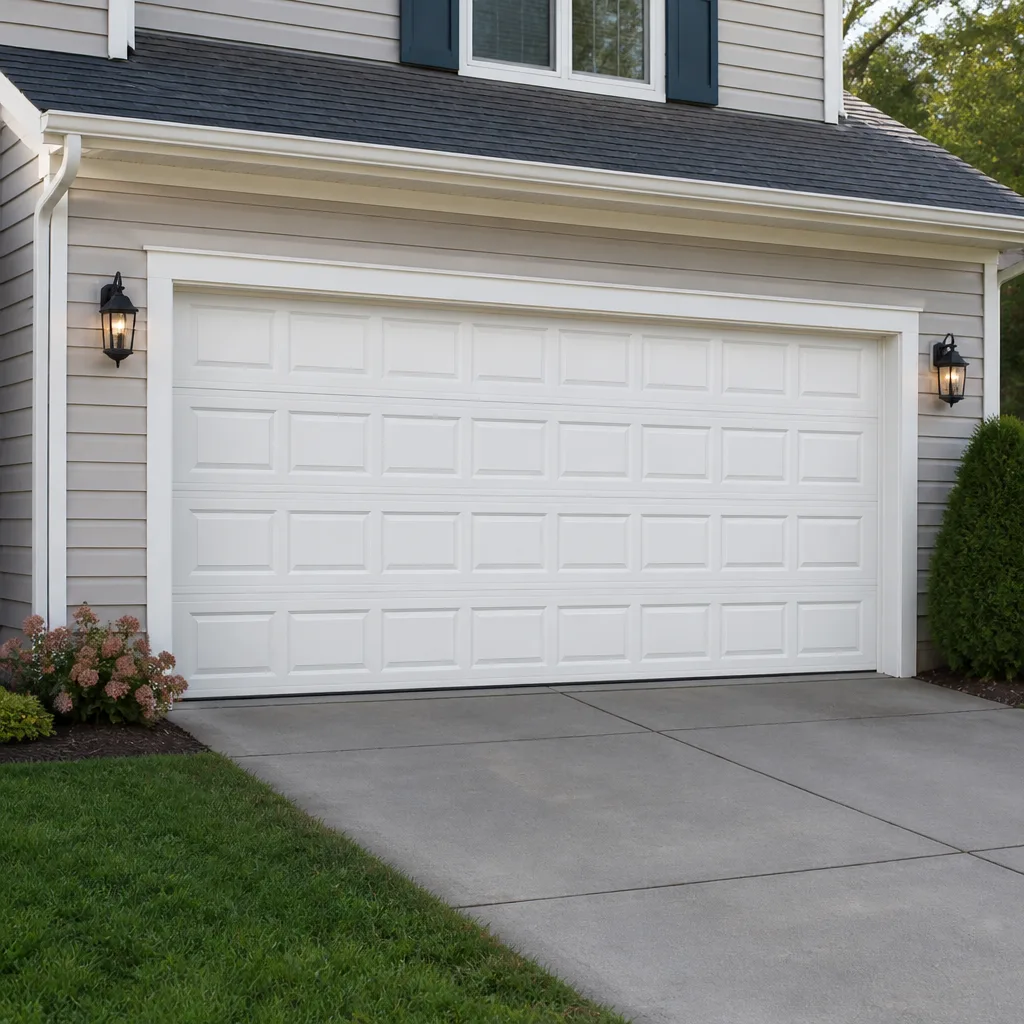 Raised-panel steel
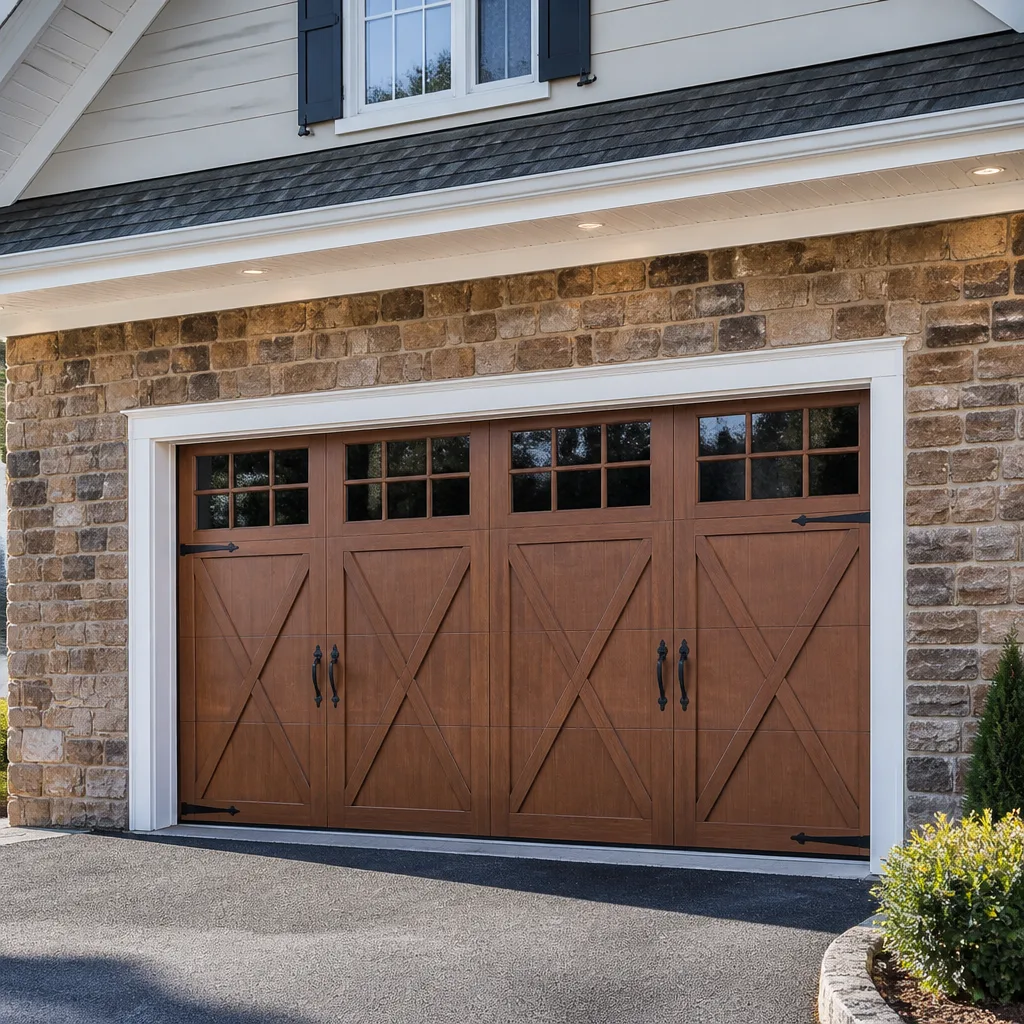 Carriage house
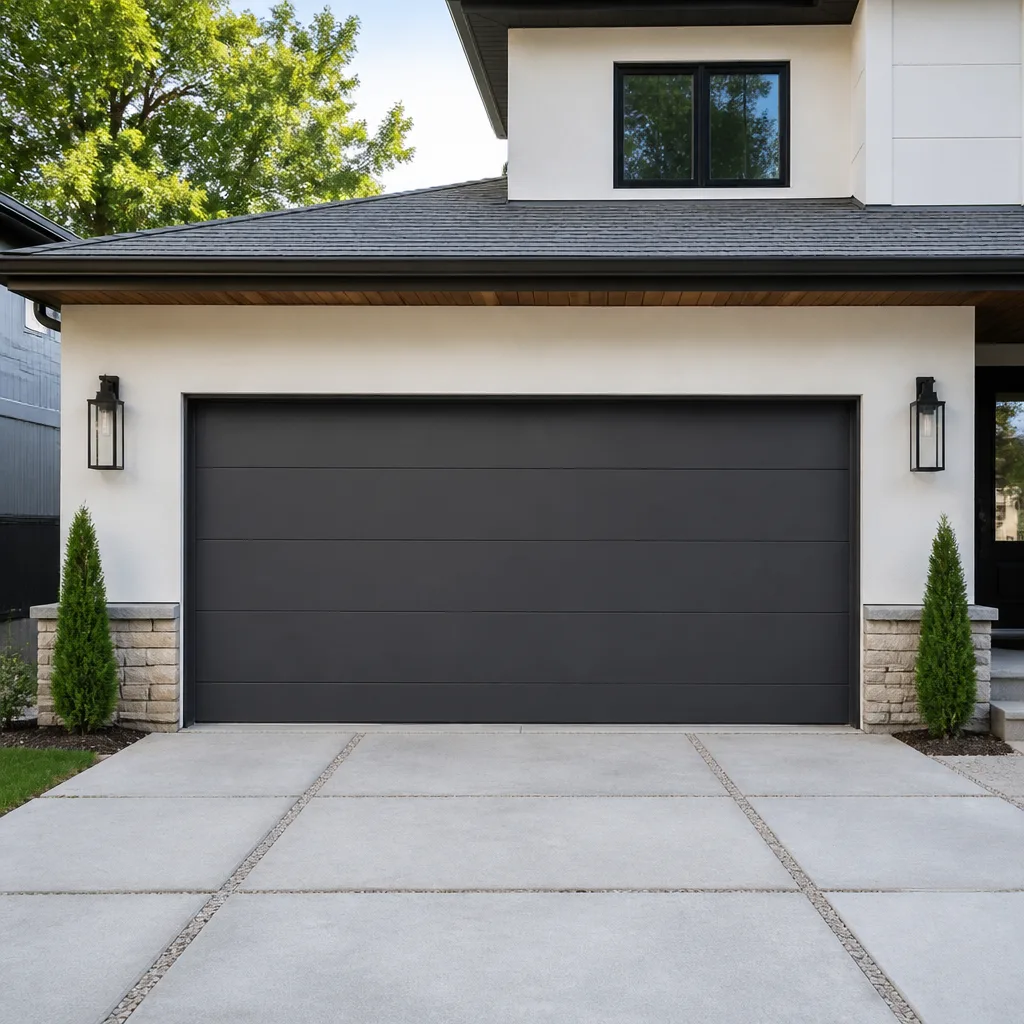 Modern flush
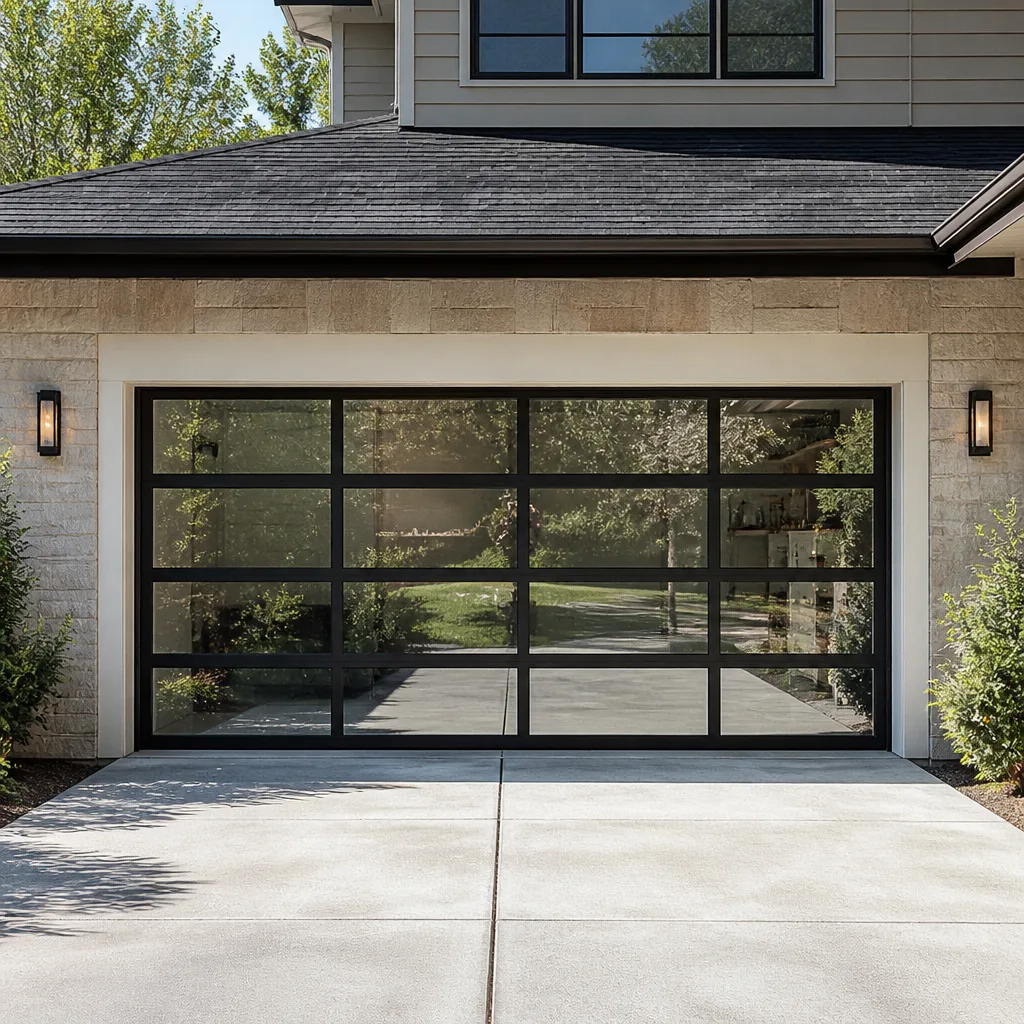 Full-view glass
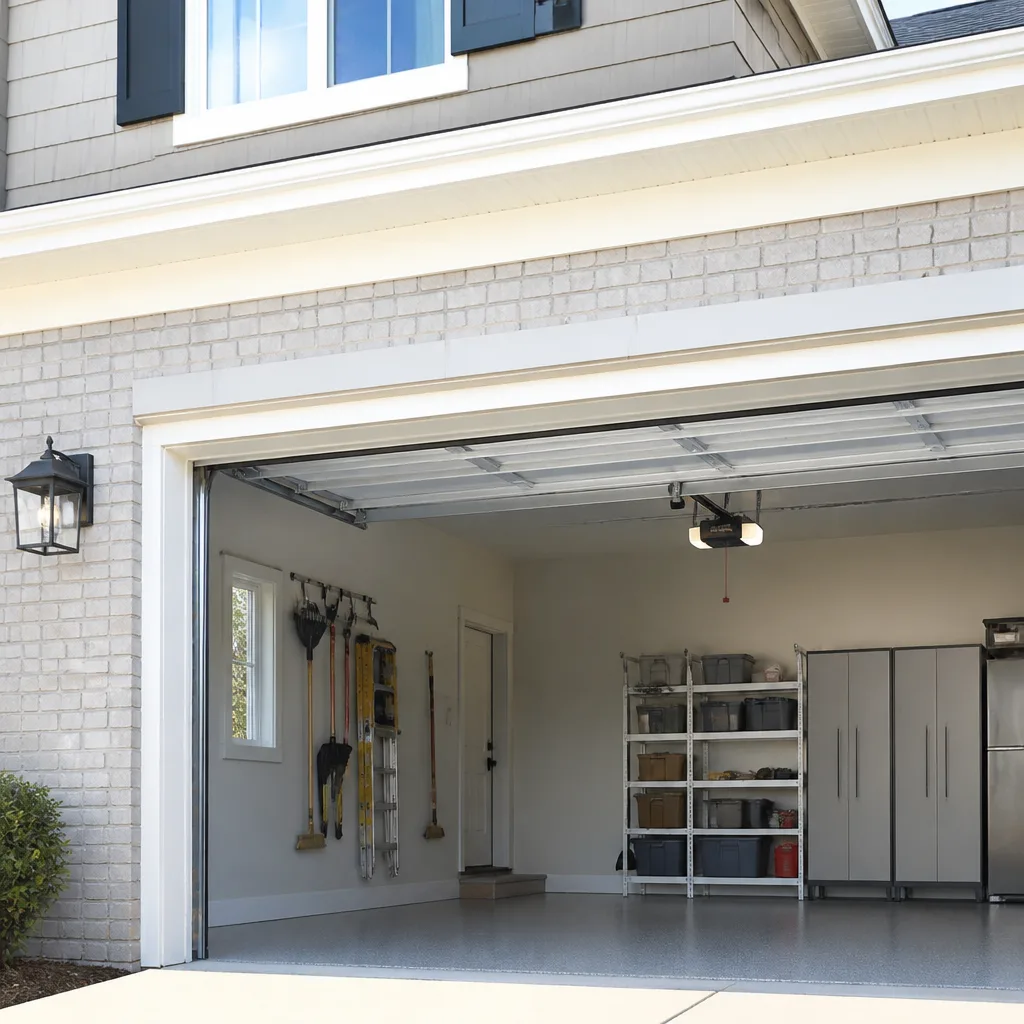 LiftMaster openers
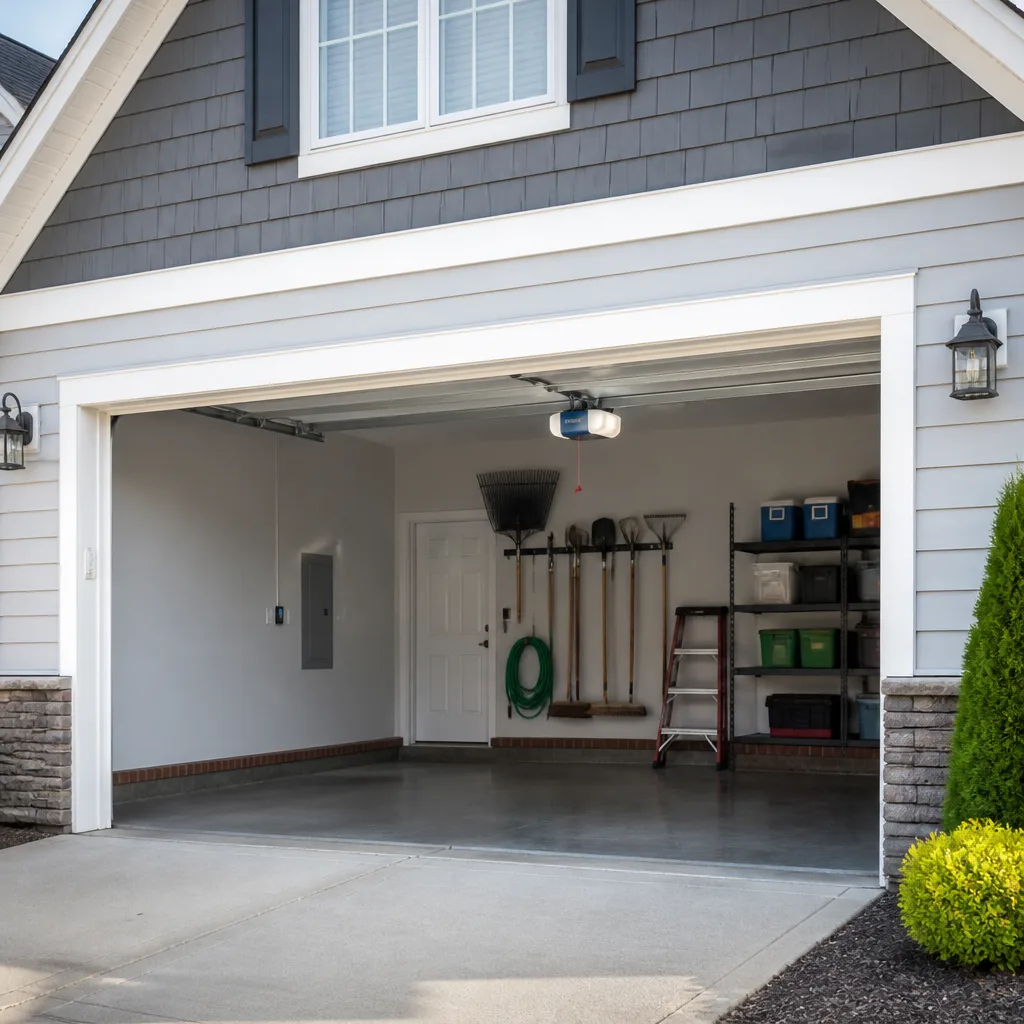 Chamberlain openers
Full 25-point door and opener safety check with every visit - springs, cables, rollers, tracks, and your LiftMaster or Chamberlain opener included
You get a price before we start. It does not change when the pro arrives.
Get your free estimateGarage Door Warning Signs: A Plymouth Homeowner’s Reference Guide
A door that hesitates for half a second before it moves is already telling you what’s about to fail. Most homeowners hear the sound, see the stutter, and file it under “it’s probably fine” until the door stops halfway down and the car is trapped inside. Garage doors don’t break without warning. They grind, drag, sag, slow down, and reverse in ways that map to specific parts inside the system, and the gap between catching a worn roller early and replacing a snapped torsion spring under pressure is the gap between a small adjustment and a full emergency visit. This guide is written for Plymouth homeowners who want to read those signals correctly before something gives out on a Sunday morning with a carpool waiting. We’ll walk through the sounds, movements, and visual cues that mean something, how Minnesota seasons bend the diagnosis, and when to shut the door down and call someone.
Quick Answer
The most reliable garage door warning signs are a door that moves in jerks instead of smoothly, a loud bang or snap from above the door, a gap at the bottom when closed, a door that reverses before touching the floor, and any visible bend in the panels or tracks. Any of these means a component is worn or failing and should be inspected before the door is used again. Loud bangs, sagging panels, and doors that come off the track need a trained technician, not a homeowner with a wrench.
Styles & brands we work with
- Raised-panel steel
- Carriage house
- Modern flush
- Full-view glass
- LiftMaster openers
- Chamberlain openers
Table of Contents
- What the Sounds Are Telling You
- Movement and Speed: The Half-Second Rule
- Visual Warning Signs You Can Spot Without Tools
- Danger Signs That Mean Stop Using the Door Now
- How Plymouth Seasons Mimic Failure Symptoms
- Opener Warnings vs. Door System Warnings
- Symptom-to-Cause Index
- A No-Tools Diagnostic Walkthrough
What the Sounds Are Telling You
A healthy garage door produces a steady, low mechanical hum – the opener motor running and the door rolling on its tracks with almost no percussion. Any new sound layered on top of that hum is information. The trick is matching the sound to the part, because a rattle near the ceiling and a rattle near the floor are two completely different diagnoses with two completely different repair paths.
Here’s how to translate the most common noises:
- A sharp bang, like a gunshot or a firecracker, from above the door: this is almost always a torsion spring snapping. It’s the loudest sound a residential garage door makes and it’s the one that should stop you from touching the door. Springs are under extreme tension even at rest.
- A grinding or scraping as the door travels: usually worn rollers, dry hinges, or a track that’s been knocked slightly out of alignment. Grinding tends to get worse over weeks, not minutes.
- A rhythmic squeak or squeal: metal-on-metal friction from hinges and rollers that have lost lubrication. Cosmetic, but worth a look before it wears the parts further.
- A rattling that follows the door up and down: loose panel hardware, a loose bracket, or a bolt backing out of the opener rail.
- A hum from the opener with no door movement: the motor is running but the drive isn’t engaging. This is an opener fault, not a door fault, and we cover it in the opener section below.
In Plymouth, the sound that generates the most calls is the bang. It usually lands in the middle of a cold snap, and the homeowner’s first instinct is to press the remote again to see if the door still works. That’s exactly the wrong move. Once a spring is broken, the door is being held up by the opener and the cables alone, and running it can bend panels or send a cable loose.
If you hear a bang, stop. Leave the door closed, leave the car parked, and get a technician out for garage door spring repair. Springs are the one part of the system we never advise a homeowner to touch, and we mean that plainly: the tension on a garage door torsion spring can injure seriously even on a door that looks completely still.
Movement and Speed: The Half-Second Rule
Watch your door open and close from a few feet back and count the hesitation. A properly balanced door starts moving the instant the opener engages and travels at a constant speed all the way up or down. A door that pauses for half a second before it lifts, slows noticeably in the middle of travel, or slams the last few inches is losing balance – and balance is the door’s own physics, not the motor’s job.
Here’s what different movement problems tend to mean:
- Hesitation at the start: the opener is straining against a door that’s out of balance, which usually traces to spring tension. Springs lose tension slowly, so the strain builds over months before anything breaks.
- Slowing in the middle of travel: often a roller binding in a track, or the door binding against a panel that’s shifted.
- Slamming at the end: the spring tension is too low to cushion the door as it approaches the floor, so gravity wins the last few inches.
- Traveling unevenly, one side higher than the other: usually a cable or a track problem, and this is the one that can lead to a door coming off its tracks if you keep running it.
- Reversing before it reaches the floor: the safety sensors at the bottom of the tracks are either misaligned, dirty, or blocked, and the opener is doing exactly what it was designed to do.
The half-second rule works because a balanced door needs almost no force to move. When you hear the opener groan or watch the door hesitate, the motor is compensating for something the spring used to handle. That’s why a movement problem is often a spring or balance problem in disguise, and why a technician checks the spring before touching the opener.
A door that reverses on its own or closes on a car is a safety issue, not a convenience issue. If your door reverses without anything in the way, the sensors need attention today. Our garage door opener repair team handles sensor alignment and opener faults on the same visit, because a sensor problem and an opener problem look almost identical from the driver’s seat.
Visual Warning Signs You Can Spot Without Tools
You don’t need a level or a tape measure to catch most of the visual warnings. Walk around the inside of the door with the door closed, then again with it open. Five minutes on your feet will tell you most of what a technician needs to know before they arrive.
Look for these, in this order:
- A gap of daylight at the bottom of the closed door: a small sliver is normal wear on the bottom seal. A visible gap across part of the door means the door isn’t sitting level, which points to a cable, track, or hinge issue underneath.
- Bent or creased panels: a dent from a bumper is cosmetic; a crease that runs vertically or diagonally through a panel is structural. Creased panels usually mean the door took a hit while moving and the panel has lost its rigidity.
- Bowed tracks: run your eye down the vertical track on each side. It should be straight. A visible bow or a track that’s pulled away from the wall is a door-off-track risk.
- Sagging door in the open position: if the door hangs lower on one side when fully up, the cable or the drum on that side is suspect.
- Loose hinges and rollers sitting at an angle: rollers should sit straight in the track. A roller cocked at an angle is worn and about to fall out of the track.
- Rust or heavy grease streaks on the springs: springs that are past their useful life often show discoloration or visible oil on the coils. This is a cosmetic signal that a mechanical one is close behind.
Cosmetic wear is the paint, the trim, the seal, the rollers’ noise floor. Structural failure is anything that changes the door’s plane – the panels, the tracks, the cables, the door’s levelness against the floor. If the door lies flat, runs straight, and sits level with the ground, the wear you’re seeing is likely cosmetic. If any of those three fails, treat it as structural until a technician says otherwise.
A local angle worth knowing: Plymouth garages take a real beating across a year. Freezing nights, warm afternoons, and repeated open-and-close cycles through mud season all put extra load on the springs and cables. If your door was fine in October and starts dragging in January, the change is the clue, not the door itself.
Danger Signs That Mean Stop Using the Door Now
Some warning signs are a request for a service visit. Others are a stop sign. The four below should take the door out of service entirely until a trained technician has been on site, because operating through them causes secondary damage – bent panels, snapped cables, or a full door replacement that a small repair would have prevented.
- A snapped torsion spring. You’ll usually hear the bang and see the two halves of the spring separated on the shaft above the door. Do not open or close the door. Do not pull the manual release. Do not try to lift the door by hand. The opener is not rated to hold the door’s weight and the cables are now carrying a load they weren’t designed for.
- A door that has come partially off its tracks. If one side of the door has hopped the track or the rollers are visibly out of the channel, stop. A door that comes fully off the track can fall, and the panels are heavy enough to cause serious injury.
- A loose or snapped cable. Cables are under tension just like springs, and a cable that has snapped or slipped its drum can whip. Leave it alone and call for garage door repair.
- A door that fails the reverse test. If you place a low object in the door’s path and the door doesn’t reverse when it should, the safety system has failed. That’s a serious hazard for anyone walking underneath, including kids and pets.
We say this plainly because we’ve seen the outcome of not stopping: a homeowner who ran the opener after a spring snapped and bent the top panel out of alignment, turning a same-day spring repair into a full panel and hardware job. When your door won’t move, we do – but the first move belongs to the homeowner, and it’s the one where they stop pressing the button.
Emergencies are core business for us, not an add-on. Plymouth Garage Door Repair Pros answers calls for snapped springs, dead openers, and doors stuck open or closed. Call (855) 337-1124. We answer 24/7. Fast dispatch from 7am to 7pm, Sunday through Friday.
How Plymouth Seasons Mimic Failure Symptoms
Not every warning sign is a failing part. In Plymouth, a good chunk of the “my door is broken” calls we get turn out to be the door responding to the season, not to a worn component. Knowing the difference keeps you from paying for a repair you don’t need – and from missing a real failure that has the same symptoms as weather.
Here’s how the seasons fool people:
- Winter cold and stiff operation. Cold thickens the grease in rollers and hinges and shrinks the door’s metal slightly. A door that drags on a single-digit morning may be fine by afternoon. The tell for a real problem: the drag is still there on a mild day.
- Freezing at the bottom seal. Meltwater on a warm afternoon runs under the door and freezes when the temperature drops overnight. The door sticks to the floor and the opener strains on the first lift of the day. The tell: the door pops free with a small crack and then behaves normally – or it doesn’t, and the strain is somewhere else.
- Spring snowmelt and wet tracks. Water on the track and rollers produces a scraping sound that vanishes once things dry out. The tell: the sound is weather-dependent, not constant.
- Summer heat and expansion. Panels expand in the heat and can bind against the frame or the seal, producing a squeal or drag that appears on hot afternoons and disappears in the evening. The tell: same door, two behaviors, tied to temperature.
- Fall temperature swings. Springs are metal and respond to temperature changes – their tension changes with the temperature, and a door may behave differently morning vs. afternoon without anything being broken. The tell: consistent behavior across two weeks of stable weather means the door is fine; a change that persists through stable weather is a real symptom.
The rule of thumb: a symptom that comes and goes with the weather is almost always weather. A symptom that shows up and stays put for more than a week, in stable weather, is a part. If you can’t tell the difference, a free estimate will settle it quickly, and it’s cheaper than guessing.
One more Plymouth note: hail and wind-driven storms occasionally knock a panel or a bracket loose without the homeowner seeing the hit. After a big storm, look at the panels and the tracks before assuming the door is fine.
Opener Warnings vs. Door System Warnings
Here’s where a lot of Plymouth homeowners spend money on the wrong repair. The opener and the door are two separate systems bolted to each other. The opener provides the push; the springs, cables, tracks, and panels provide the balance and structure. A symptom that looks like a dead opener is often a struggling door, and a symptom that looks like a broken door is sometimes a failing opener.
Sort the symptoms by where they live:
- Opener-side symptoms: the motor hums but the door doesn’t move; the remote works only from close range; the wall button works but the remote doesn’t; the lights blink in a pattern; the door reverses immediately after it starts closing; the opener beeps or flashes codes.
- Door-side symptoms: the door moves but unevenly; the door sags on one side; there’s a bang from above the door; a visible bend in a panel or track; a gap at the bottom when closed; grinding that follows the door’s travel.
- Both systems: the opener strains when lifting the door (opener side) because the spring tension has dropped (door side). This is the most expensive misdiagnosis – replacing an opener that was fine while the springs were the actual problem.
A lot of the Plymouth housing stock runs on the same handful of brands, and brand-specific expertise matters here. LiftMaster and Chamberlain openers both route through the myQ ecosystem, so a “smart” opener problem is often a Wi-Fi or board issue rather than a motor problem. Genie openers have their own sensor and light patterns. Craftsman legacy openers are common and still serviceable. A door-side symptom, meanwhile, doesn’t care which opener is bolted to it. Clopay and Amarr doors fail on springs and cables the same way any other door does.
Our technicians have up to 11 years of experience across all eight major brands, and the first job on any call is telling you which side of the system the problem actually lives on. That’s brand-specific expertise, not guesswork.
Symptom-to-Cause Index
Use this index the way you’d use a troubleshooting chart. Find the symptom, read the likely cause, and check the urgency column before you decide what to do next.
- Symptom: loud bang from above the door. Likely cause: snapped torsion spring. Urgency: stop using the door, call for a technician.
- Symptom: door hesitates before moving. Likely cause: spring tension loss or door out of balance. Urgency: schedule a visit this week; don’t operate daily if it’s getting worse.
- Symptom: grinding sound during travel. Likely cause: worn rollers or misaligned track. Urgency: schedule a visit.
- Symptom: door reverses before touching floor. Likely cause: safety sensor misalignment or obstruction. Urgency: check the sensors today; call if the issue persists after cleaning.
- Symptom: gap of daylight at the bottom of the closed door. Likely cause: door out of level or bottom seal damaged. Urgency: schedule a visit; water intrusion makes this worse.
- Symptom: door sags on one side when open. Likely cause: cable or drum on the sagging side. Urgency: stop using the door; this can lead to coming off track.
- Symptom: opener hums, door doesn’t move. Likely cause: opener drive failure or a disengaged manual release. Urgency: check the release first, then call for opener service.
- Symptom: door slams at the end of travel. Likely cause: spring tension low. Urgency: schedule a visit before it becomes a spring failure.
- Symptom: reversed operation, one remote won’t work, or light codes flashing. Likely cause: opener programming, sensor, or board. Urgency: schedule a visit; often a quick fix.
- Symptom: door won’t stay on track when closing. Likely cause: bent track, worn roller, or a shifted panel. Urgency: stop using the door; off-track doors can fall.
The two rows that say “stop using the door” are the ones that matter most. Everything else is a scheduling question.
A No-Tools Diagnostic Walkthrough
You can do a thorough walkthrough of your door with nothing but your eyes and ears. Do this on a mild day when you’re not in a hurry, and do it from inside the garage where you can see the mechanism. Here’s the order we use, and the order you can copy:
- Stand back and watch the full open and close cycle. Note speed, hesitation, and where the door lands. The half-second rule applies here.
- Listen for changes in sound across the cycle. Grinding tends to start in one spot; a bang is a one-time event; a click or pop often traces to a loose hinge.
- Check the bottom seal from outside. Look for daylight, then feel the door’s bottom edge – if it’s not sitting level, the door is out of balance.
- Run the reverse test. Place a low object in the door’s path and close it. If it doesn’t reverse, the safety system needs a technician’s attention.
- Look at the springs from the inside, door closed. Discolored coils or oil on the springs are a sign to schedule spring service. Do not touch them.
- Run a finger along the track. A straight track is fine; a bow, kink, or loose attachment means a repair visit.
- Cycle the opener with the door in manual release. If the open and close by hand is smooth, your opener is likely fine and the door itself may be the problem – or vice versa. This is the fastest way to know which side to call about.
If your diagnostic walkthrough turns up one of the danger signs above, stop the walkthrough there. Everything else you can note down and hand to the technician when you call.
Common Mistakes to Avoid
- Pressing the remote again after a bang. A snapped spring means the door is no longer being held by the balance system. Running the opener to see if it still works is how a small repair becomes a full panel replacement.
- Replacing the opener when the real problem is the door. A motor that strains, a door that hesitates, and a door that slams are door-side balance problems most of the time. Replacing the opener masks the symptom and doesn’t fix the balance.
- Diagnosing a Minnesota winter as a mechanical failure. A door that drags on a cold morning is not broken. Wait for a mild day before deciding the spring is shot, and don’t pay for a repair on weather you didn’t account for.
- Ignoring a gap at the bottom of the door through the winter. Water and cold air get in through a gap, and in Plymouth that means more than a draft. A door that won’t sit level against its seal is telling you something is off in the tracks or the cables.
- Calling a general handyman for a spring. Springs, cables, and off-track doors are the one part of the trade where the wrong tool and the wrong hands cause real injury. Use a company that specializes in garage doors and handles spring repair as a named service.
- Skipping the reverse test. It takes ten seconds and it’s the only check that directly protects the people who walk under your door. If the door doesn’t reverse, the safety system has failed.
- Waiting on a door that’s off track. A door that’s hopped its track can fall. There’s no “check it tomorrow” for this one; it’s a stop and call.
See the difference
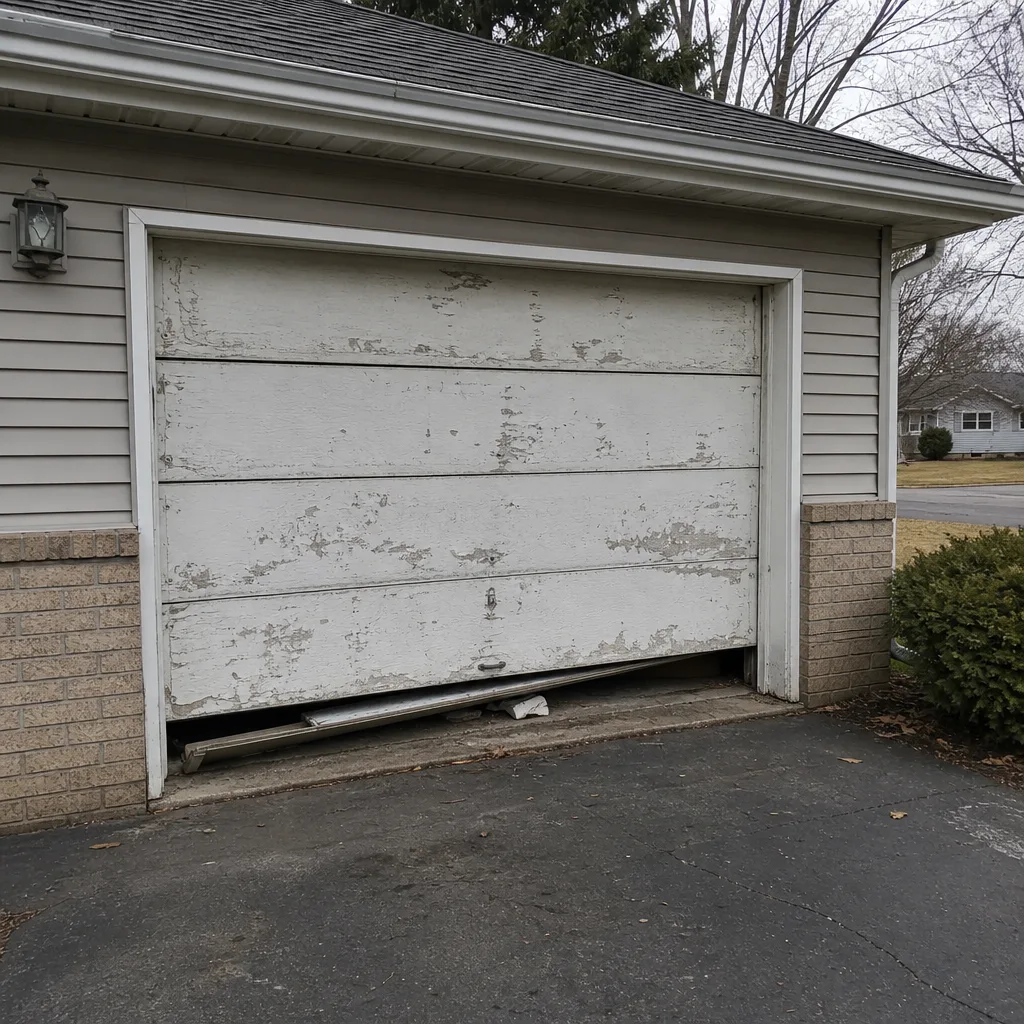 Before
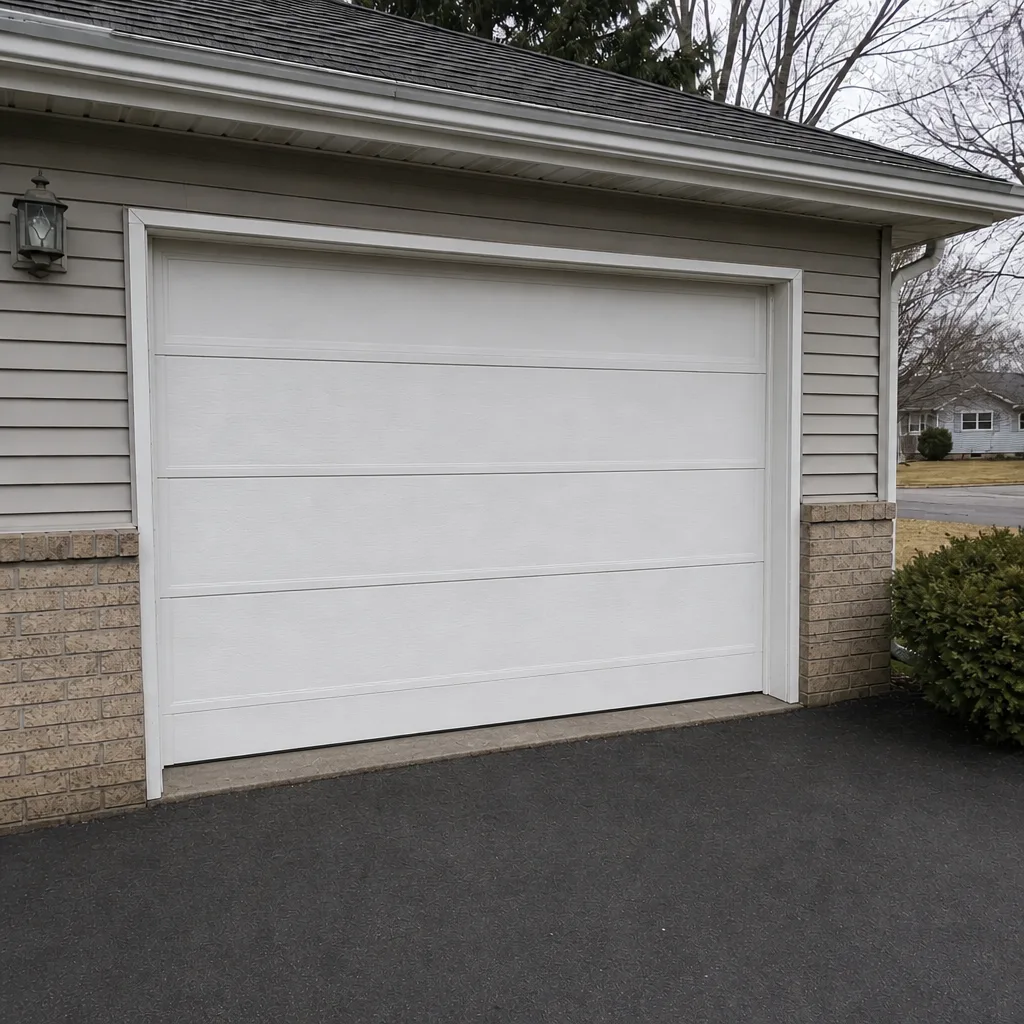 After
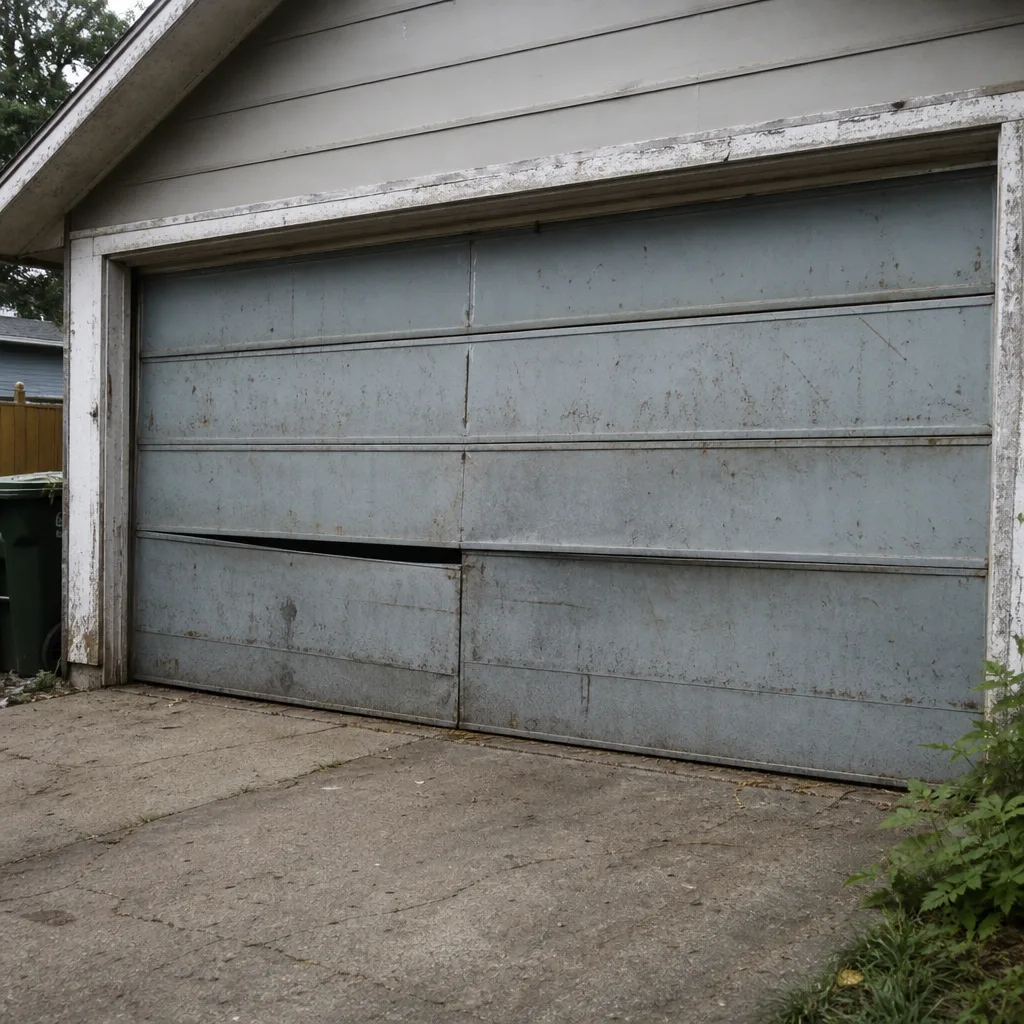 Before
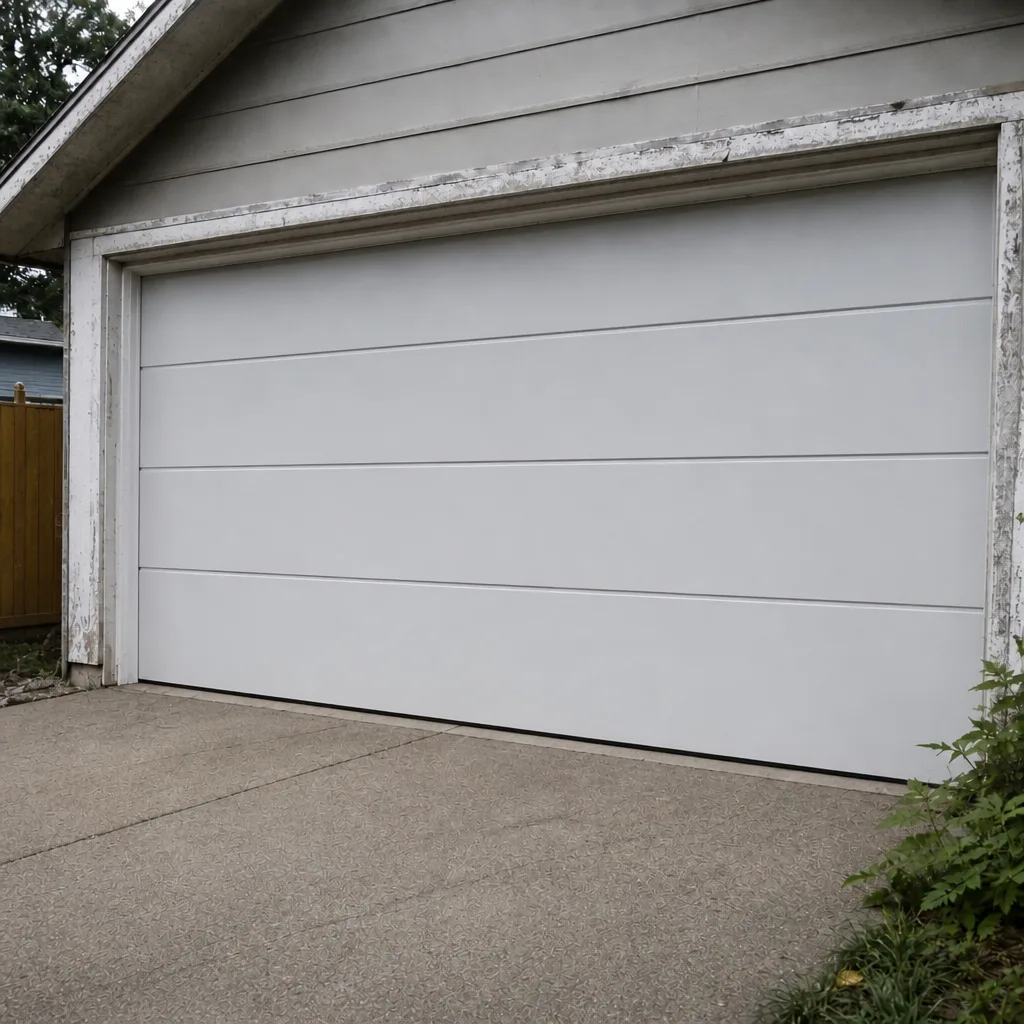 After
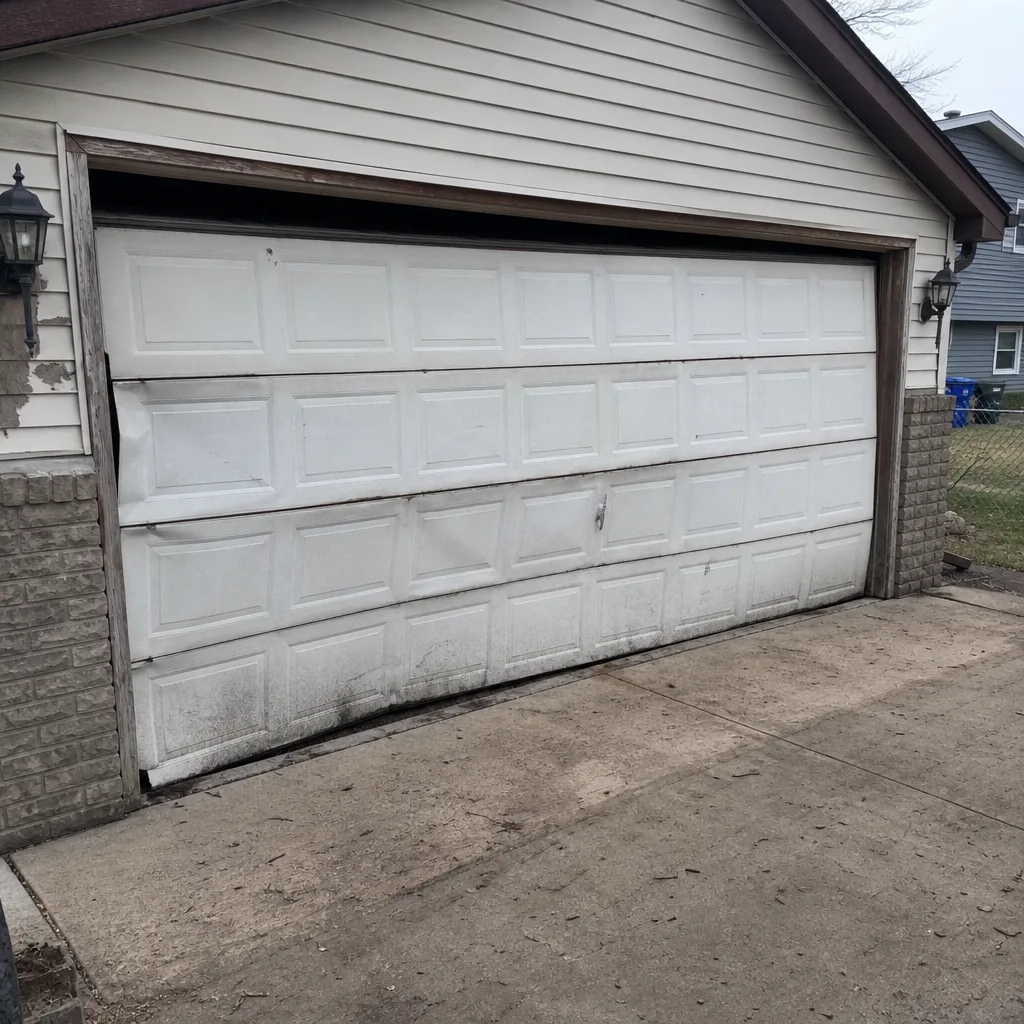 Before
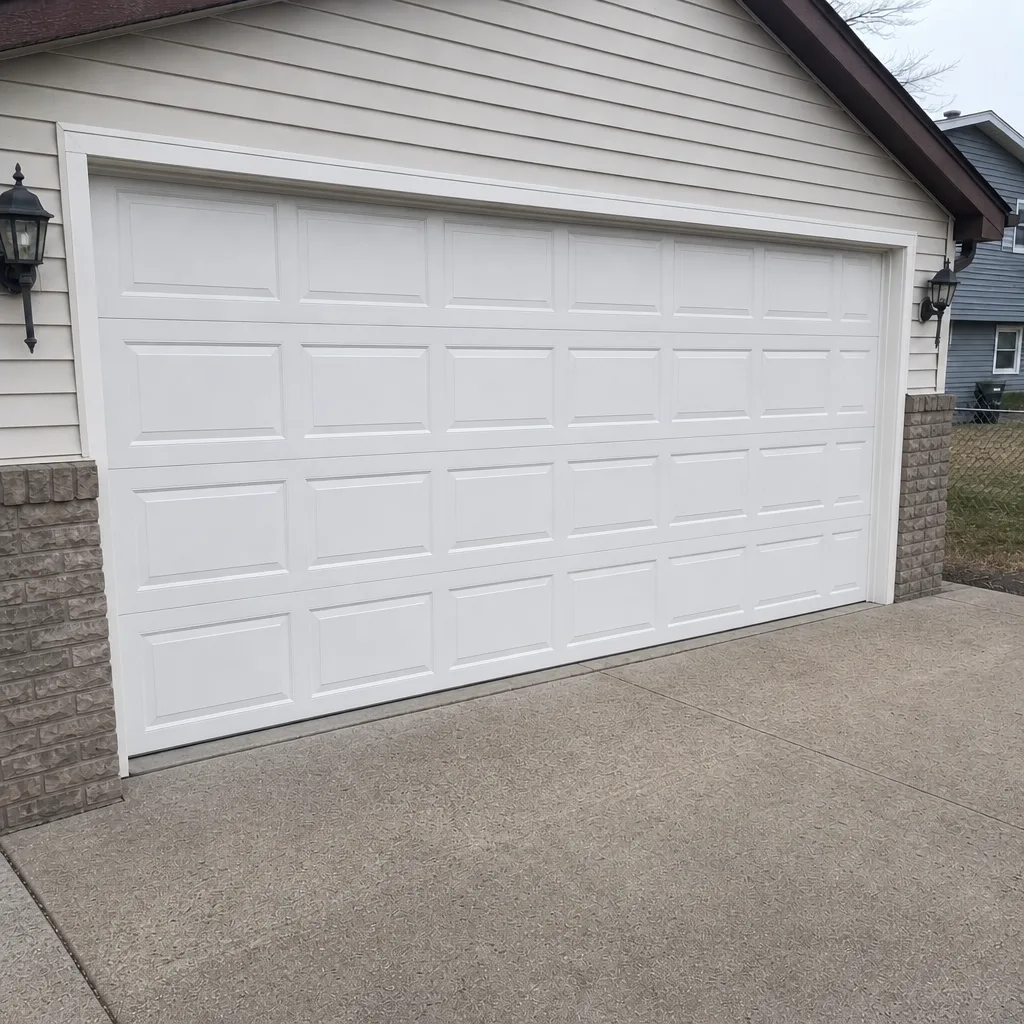 After
When to Call a Professional
Call a professional the moment the door makes a bang, sags on one side, comes off the track, or fails the reverse test. Those are the four signs where operating the door causes more damage and puts people at risk. Schedule a visit for hesitation, grinding, gaps at the bottom, and a door that isn’t sitting level – those are usually spring, roller, or alignment issues that a trained eye diagnoses quickly. If your opener hums without moving the door, or the remotes stop working after a power outage, that’s an opener call, and it’s worth having the whole system checked on the same visit rather than chased one part at a time.
Plymouth Garage Door Repair Pros offers free estimates in Plymouth. Call (855) 337-1124. Our technicians work on LiftMaster, Chamberlain, Genie, Clopay, Amarr, Wayne Dalton, Craftsman, and Raynor systems, and our technicians have up to 11 years of experience translating exactly these signs into an accurate repair. When your door won’t move, we do.
Frequently Asked Questions
A loud bang from above the door followed by a door that won’t open or opens a few inches and stops. The bang is the spring snapping; the short travel is the opener straining against a door that’s no longer balanced. If you hear the bang, stop using the door and call (855) 337-1124 for spring repair. Estimates are free, and we’ll talk you through exactly what to do with the door until the technician arrives.
Put the door in manual release and move it by hand. If it moves smoothly and stays in place, your opener is the likely problem. If it’s heavy, hesitates, or drags unevenly, the issue is door-side – usually springs, rollers, or a track. This ten-minute test saves Plymouth homeowners from paying for an opener that was fine all along.
Probably not. Cold thickens the grease in rollers and hinges and changes the metal’s fit, so a door that drags at dawn and runs smoothly by midday is responding to temperature, not failing. The test: watch the door on a mild day. If it’s still dragging when the weather is stable, that’s a real symptom worth a visit.
No. A door that hangs lower on one side is usually dealing with a cable, drum, or track problem on that side, and running the door can pull it further out of alignment or off its track. Stop using the door and call for a repair visit. This is one of the four warning signs that take a door out of service entirely until a technician has seen it.
The price depends on what’s actually wrong – a roller and hinge service costs far less than a spring replacement, and we quote a range before anything starts so you know what you’re approving. We don’t publish flat rates because a door that looks like a spring problem can turn out to be a balance issue, and you shouldn’t pay for a swap the door didn’t need. Call (855) 337-1124 for a free estimate. The written estimate sets the final price, and you agree to it before we start work.
Often, yes. We treat emergency door failures – snapped springs, doors off track, dead openers – as core work, not an upsell, so a stuck door gets priority. Call (855) 337-1124. We answer 24/7. Fast dispatch from 7am to 7pm, Sunday through Friday. A call outside dispatch hours is booked into the next opening.
The Bottom Line
A garage door is telling you something every time it opens and closes. The bang, the hesitation, the sag, the gap of daylight – each one maps to a specific part, and each one is cheaper to fix early than after the door fails under load. Read the signs, run the ten-minute reverse test, sort opener problems from door problems before you spend money, and treat bangs, sagging doors, off-track doors, and failed safety tests as stop signals rather than wait-and-see. For Plymouth homeowners, the winter months add a layer of weather-related noise on top of that, so wait for a mild day to decide whether the symptom is a part or a season. When in doubt, get it looked at. And if a door is stuck, off its track, or won’t reverse, stop pressing the button and call.
Plymouth Garage Door Repair Pros works on every major brand – LiftMaster, Chamberlain, Genie, Clopay, Amarr, Wayne Dalton, Craftsman, and Raynor – and covers springs, openers, panels, and complete new doors on one call. Free estimates, upfront pricing agreed before any work starts. Call (855) 337-1124. We answer 24/7. Fast dispatch from 7am to 7pm, Sunday through Friday.
Written by the team at Plymouth Garage Door Repair Pros.